The announcement by Reliance Industries and Rolls-Royce that they intend to jointly pursue development of an indigenous combat aircraft engine for India’s Advanced Medium Combat Aircraft (AMCA) programme could mark an important inflection point in the country’s long quest for technological autonomy in military aviation.
India has demonstrated considerable capability in designing combat aircraft, missiles, radars, electronic warfare systems and weapons, but the high-performance turbofan engine has remained one of the most difficult gaps in its defence-industrial ecosystem.
On August 14, Reliance Industries and Britain’s Rolls-Royce announced their strategic intent to combine capabilities for the design, development, manufacture and delivery of what they describe as a “sovereign indigenous combat engine” for AMCA. The companies also propose exploring the creation of a dedicated Aerospace Gas Turbine Complex in India, envisaged as a centre of excellence covering propulsion technology.
Crucially, the stated ambition extends beyond assembling a foreign engine: the proposed ecosystem would encompass design, development, manufacturing, testing, production and through-life support in India.
Anant Ambani, Executive Director of Reliance Industries, framed the initiative in terms of strategic autonomy. “India’s strategic autonomy requires sovereign capability in critical technologies,” he said. According to Ambani, the objective is to combine Rolls-Royce’s propulsion expertise with Reliance’s “technology, manufacturing, scale and execution capabilities” to create an indigenous aero-engine ecosystem and, eventually, make India globally competitive in advanced propulsion.
Rolls-Royce CEO Tufan Erginbilgiç similarly described the proposed partnership as “a major milestone towards building a robust, self-reliant aerospace ecosystem” in India. Rolls-Royce brings substantial experience in military propulsion, including the EJ200 that powers the Eurofighter Typhoon and a long history of supplying engines for Indian military aircraft.
The missing piece in India’s fighter programme
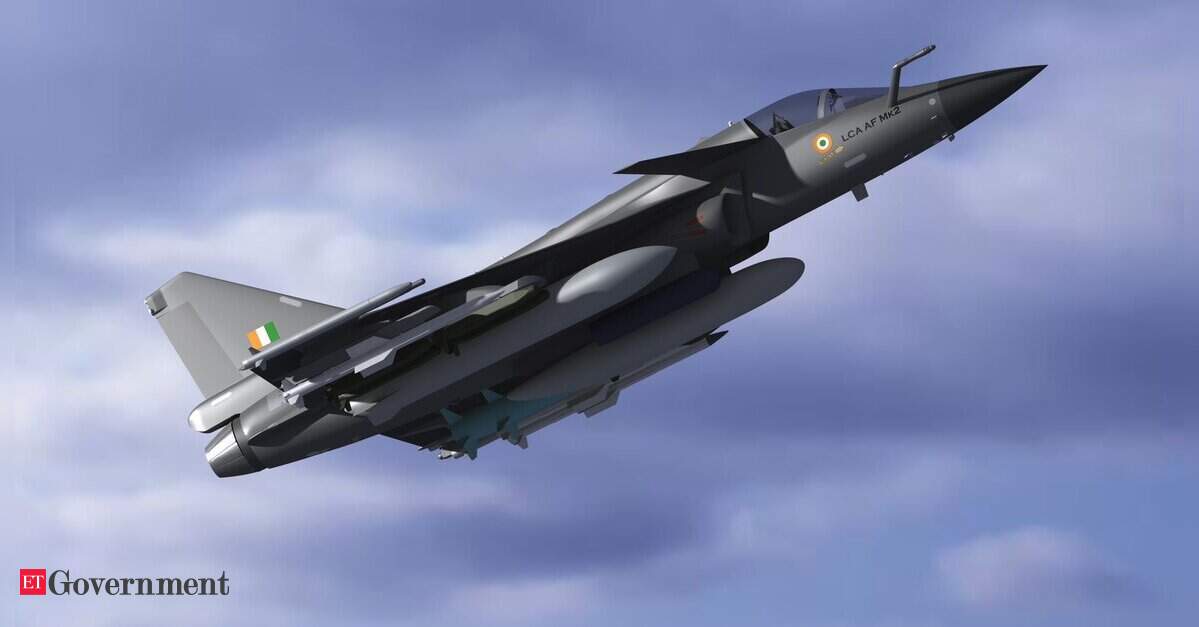
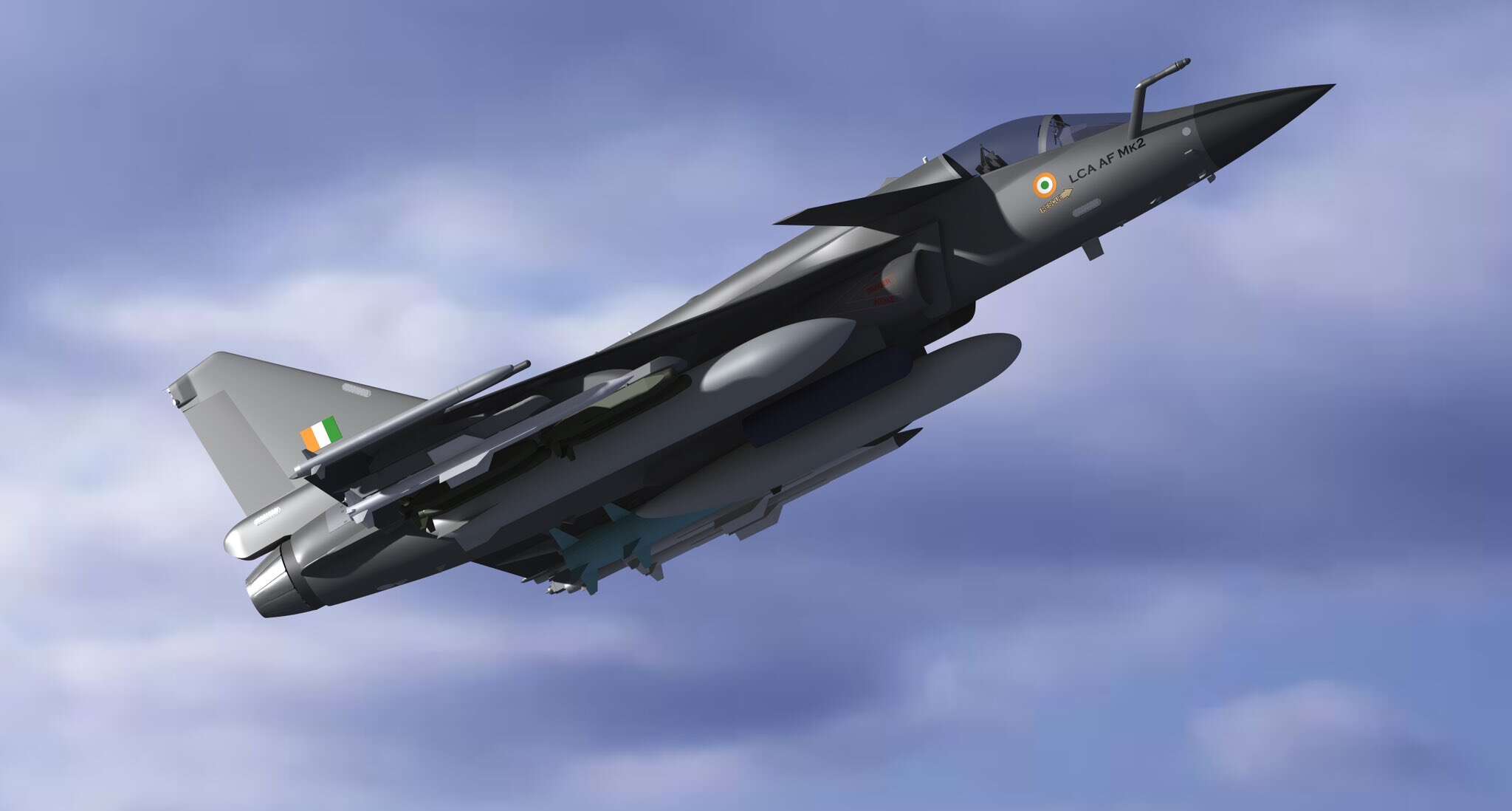
The significance of the announcement becomes clearer when viewed against India’s experience with fighter aircraft development. India has successfully created the Tejas family and is developing the Tejas Mk2 and AMCA, but the propulsion systems for its frontline indigenous fighters remain dependent on overseas suppliers. The Tejas currently relies on GE Aerospace engines, while the initial AMCA configuration has also been planned around a foreign powerplant.
That dependence is not merely an issue of import expenditure. Engines determine an aircraft’s thrust, range, payload, acceleration, electrical generation, thermal management and, increasingly, its ability to support advanced sensors and electronic warfare systems. For stealth fighters, the relationship between engine and airframe becomes even more complex because propulsion has to be integrated with requirements involving infrared signature, internal weapons carriage, thermal management and aerodynamic performance.
Recent experience has also demonstrated the supply-chain dimension of the problem. Reuters noted that Hindustan Aeronautics Limited has faced slow deliveries of GE engines for the Tejas because of supply-chain difficulties at the American manufacturer. Such disruptions underline a strategic reality: a country may possess an indigenous aircraft design and production line, but dependence on a single imported propulsion system can still constrain production schedules and fleet expansion.
India has confronted the engine challenge for decades. The Kaveri programme, sanctioned in 1989 and led by DRDO’s Gas Turbine Research Establishment (GTRE), did not ultimately provide the required engine for the Tejas. Yet it was not technologically barren. Nine full prototype engines and four core engines were built, more than 3,200 hours of testing were conducted, and altitude and flying-test-bed trials were completed. The government has acknowledged that technologies developed through Kaveri are being utilised in subsequent engine programmes.
The difficulty encountered by Kaveri illustrates why advanced fighter propulsion remains the preserve of a relatively small group of countries. Modern turbofan development requires mastery of high-pressure compressors, combustion systems, turbine aerodynamics, single-crystal blades, thermal barrier coatings, high-temperature materials, sophisticated control systems and precision manufacturing. The components must survive extraordinary temperatures and mechanical stresses while meeting exacting requirements for reliability, weight and fuel efficiency.
Defence Minister Rajnath Singh highlighted precisely this challenge during a visit to GTRE in February 2026. Describing aero-engine development as an exceptionally complex undertaking involving thermodynamics, material science, fluid mechanics and advanced mechanical engineering, he noted that even technologically advanced countries can take decades to develop next-generation engines. “We must assume that 20 years have already passed and we now have only 5-7 years left,” he said.
AMCA raises the stakes
The propulsion question has become more urgent because AMCA is central to India’s future air-power architecture. The fifth-generation twin-engine fighter is being designed around stealth, internal weapons carriage, advanced sensors, electronic warfare and network-centric combat capabilities. A prototype is expected around 2028, although the development and certification process will necessarily extend beyond the first rollout.
The government has also deliberately altered the industrial model behind AMCA. In May 2025, Defence Minister Rajnath Singh approved an execution framework giving both public and private Indian companies an opportunity to compete for the development programme, independently or through joint ventures and consortia. The government plans five prototypes before series production.
The Reliance–Rolls-Royce proposal fits into this broader attempt to expand India’s defence-industrial base beyond the traditional public-sector model. Reliance would bring private-sector capital, manufacturing scale and programme execution, while Rolls-Royce would contribute decades of advanced propulsion expertise. If structured around genuine co-development rather than licensed manufacture, the partnership could help create engineering knowledge that survives beyond one particular engine programme.
But the Rolls-Royce proposal is not the only option before India. Reuters reports that France’s Safran has separately proposed working with GTRE on a higher-thrust engine for later AMCA variants. Discussions with Safran have included some of the most consequential issues in any such collaboration: development costs, technology transfer, intellectual-property ownership and export rights.
This competition could work to India’s advantage. The decisive criterion should not simply be which company offers an engine with the required thrust. New Delhi’s objective is fundamentally different from purchasing another propulsion system. It needs access to the underlying science, design methodologies, manufacturing processes, testing infrastructure and intellectual property required to independently develop, modify, maintain and eventually export future engines.
From importing engines to owning the technology
This distinction between manufacturing sovereignty and technological sovereignty is critical. An engine assembled in India with a high percentage of locally manufactured components may reduce imports but still leave the country dependent on a foreign original equipment manufacturer for design modifications, critical materials, software, upgrades or export permissions. A genuinely sovereign programme must progressively give Indian engineers control over the engine’s lifecycle.
Rajnath Singh has explicitly linked aero-engine capability with national security in an era of fractured supply chains. “Supply chains are breaking and new ecosystems are developing. Nations possessing indigenous critical technologies will remain safe, secure, and sustain themselves,” he said during his GTRE visit. He also argued that India should already be looking beyond fifth-generation propulsion towards sixth-generation technologies incorporating artificial intelligence, machine learning and new materials.
The benefits could extend far beyond AMCA. Competence in high-temperature materials, turbine technology, precision manufacturing and gas-turbine engineering has applications across unmanned combat aircraft, cruise missiles, transport aircraft, marine propulsion, power generation and eventually civil aviation. Rajnath Singh has specifically pointed to the dual-use potential of high-temperature composites and other technologies emerging from India’s aero-engine research.
The Reliance–Rolls-Royce announcement therefore represents an opportunity rather than a completed breakthrough. A statement of strategic intent still has to be translated into a detailed programme involving investment, workshare, intellectual-property arrangements, technology transfer, testing infrastructure, certification and government approval. India must judge the proposal—and competing offers—by how much enduring technological capability they leave within the country.
AMCA is intended to demonstrate that India can design and manufacture a sophisticated fifth-generation combat aircraft. Developing its engine would represent something even more consequential. It would mean acquiring mastery over one of the most difficult technologies in modern aerospace. If India can move from importing fighter engines to designing, producing, upgrading and supporting them independently, the achievement would transform not only the AMCA programme but the country’s position in the global aerospace hierarchy.