

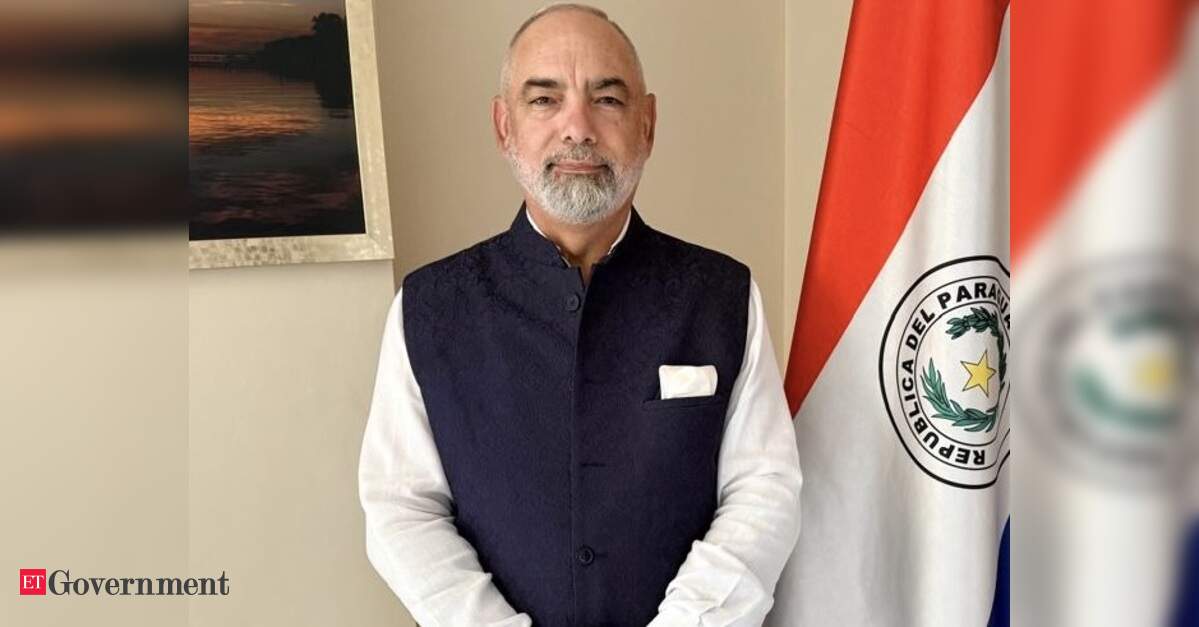
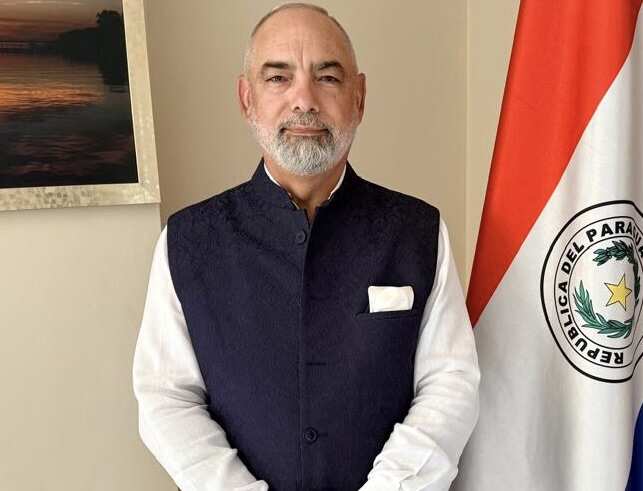
India and Paraguay are seeking to expand their bilateral relationship beyond traditional diplomatic engagement, with trade, investment, digital technologies, renewable energy and industrial cooperation emerging as key priorities.Paraguay’s investor-friendly tax system, based on the territorial principle and a simple framework of 10% corporate income tax, 10% standard VAT and personal income tax rates of up to 10%, adds to its appeal as a destination for foreign investment. The establishment of the India–Paraguay Joint Commission and Paraguayan President Santiago Peña’s State Visit to India in June 2025 have created fresh momentum for bilateral engagement.With trade reaching approximately $514 million in 2025, both countries see considerable scope for expanding economic cooperation.In conversation with Anoop Verma, Fleming Raúl Duarte Ramos, Ambassador of Paraguay to India, discusses the prospects for Indian investment, cooperation in digital public infrastructure, cybersecurity, artificial intelligence and clean energy, and opportunities arising from deeper India–MERCOSUR economic integration.He also shares his perspective on India’s growing international role and Paraguay’s potential to serve as a gateway for Indian businesses seeking access to South American markets.Edited excerpts:How do you assess the current state of diplomatic and economic relations between India and Paraguay? What are your principal priorities as Ambassador, and which areas offer the greatest potential for strengthening bilateral cooperation over the next five years?
I would describe the current state of India–Paraguay relations as positive, dynamic and increasingly multidimensional. We have built significant political momentum in recent years, and I see the challenge now as translating that momentum into deeper and more tangible cooperation.Our diplomatic relations date back to 13 September 1961, but the relationship has acquired a much stronger institutional dimension in recent years. The opening of the Embassy of India in Asunción in 2022 was an important milestone, establishing a resident diplomatic presence that gave new momentum to the relationship. President Santiago Peña’s first State Visit to India, from 2 to 4 June 2025, gave further impetus to the relationship, and this was followed by the establishment of the India–Paraguay Joint Commission, which provides a structured mechanism for identifying common objectives, following up on commitments and expanding cooperation, while its first meeting in Asunción in November 2025 established a broad set of priority areas for our bilateral agenda.Economically, I would describe the relationship as complementary, but still below its full potential. Bilateral trade reached approximately USD 514 million in 2025, according to Paraguayan trade data based on Central Bank of Paraguay figures. Nevertheless, I believe there is considerable room to expand and diversify trade, particularly by creating stronger connections between businesses and identifying new areas of commercial and investment cooperation.My principal priority as Ambassador is therefore to help transform the political momentum of recent years into concrete economic, technological and institutional cooperation. The Joint Commission gives us an important framework for doing this, and my focus over the next five years will be on helping to turn the priorities already identified into tangible opportunities, while also identifying new areas where our two countries can work together.I would like to see a relationship that is not only broader, but also deeper — one in which political dialogue is matched by stronger trade and investment ties, greater technological cooperation, and more direct connections between our institutions, businesses and people.India is one of the world’s major economies, while Paraguay offers opportunities in agriculture, renewable energy and manufacturing. What steps are being taken to expand bilateral trade, encourage Indian investment in Paraguay and create new opportunities for Paraguayan businesses in the Indian market?
We are taking a practical approach to strengthening our economic relationship with India. This means combining government-to-government dialogue with direct engagement between companies and business organizations, while using our bilateral institutional mechanisms to identify concrete opportunities for trade, investment and technology transfer.A major step in this direction was President Santiago Peña’s State Visit to India, during which the Paraguayan delegation met with leading Indian companies and business leaders in areas including agriculture, bioenergy, pharmaceuticals, technology and industry. The delegation also presented Paraguay’s investment and business opportunities to more than 100 Indian startup CEOs, particularly highlighting the country’s clean energy, strategic location and potential as a regional platform.The message was not only about what Paraguay can offer in terms of clean and abundant energy and strategic location, but also about the possibilities of using Paraguay as a platform for engagement with the wider MERCOSUR market.We are already seeing concrete outcomes from this engagement. One example is the agreement between Paraguayan company Enersur and India’s Praj Industries for a biofuels project in Paraguay. Beyond this particular project, discussions during the presidential visit with companies such as UPL, Jindal Steel and Power, Trident and Reliance Jio opened avenues for exploring opportunities in agriculture, industry, textiles, energy and digital technologies.At the same time, we want to make the relationship work both ways. For Paraguayan companies, one of our priorities is to help them better understand the Indian market and establish contacts with potential Indian partners. In this regard, the Paraguayan Ministry of Industry and Commerce and the IMC Chamber of Commerce and Industry in Mumbai signed a Memorandum of Understanding aimed at strengthening commercial relations and facilitating future business missions.The institutional framework is also important. The India–Paraguay Joint Commission provides a mechanism to identify common objectives, facilitate contacts between companies and industries, and promote technology transfer. This gives us a platform to follow up on the opportunities identified by the private sector and turn them into longer-term partnerships.Our objective is therefore not simply to increase the volume of trade. It is to diversify what we trade, encourage investment, promote technology transfer and create partnerships that generate greater value for businesses in both countries.Paraguay is a member of MERCOSUR, the South American trading bloc. How do you view the prospects for expanding the India–MERCOSUR Preferential Trade Agreement? Could deeper economic integration provide Indian companies with greater access to South American markets while strengthening Paraguay’s commercial relationship with India?
I see the India–MERCOSUR Preferential Trade Agreement as an important foundation for expanding the commercial relationship between India and South America. The agreement has been in force since 2009 and provides tariff preferences for a defined number of products. From Paraguay’s perspective, we believe there is scope to strengthen this framework and make it more responsive to the opportunities of today’s global economy.For Paraguay, a stronger economic relationship with India would be particularly valuable because it could help diversify our export destinations and create greater opportunities for Paraguayan products, especially those with higher value addition. At the same time, I believe that a deeper India–MERCOSUR relationship could offer Indian companies a broader platform from which to engage with the South American market.We therefore support efforts to broaden market access, facilitate trade and investment, and expand the range of opportunities available to businesses on both sides. This is not only about increasing the volume of trade; it is also about creating the conditions for more diversified and higher-value economic relationships.Of course, any expansion of the agreement is a negotiation between India and MERCOSUR, and Paraguay will continue to work constructively with both India and its MERCOSUR partners. Our objective would be to contribute to an outcome that creates greater opportunities while taking into account the interests and sensitivities of all parties.Ultimately, I believe that there is significant potential here. A stronger India–MERCOSUR economic relationship could bring Indian companies closer to one of the world’s major emerging markets, while giving countries such as Paraguay an opportunity to deepen and diversify their commercial relationship with India.Paraguay has substantial hydroelectric power resources and considerable experience in renewable electricity generation. What opportunities do you see for collaboration with India in clean energy, green hydrogen, sustainable industrial development and energy technologies? Are there specific areas where Indian companies could contribute to Paraguay’s energy sector?
I see energy as one of the areas where Paraguay and India can develop a particularly meaningful partnership. Paraguay has a particularly strong foundation in clean and renewable electricity generation, and our bilateral agenda already identifies renewable energy and biofuels as priority areas for cooperation.President Santiago Peña has emphasized a development vision based on resilient communities, sustainable economies and the responsible use of Paraguay’s natural resources, including clean and renewable energy, climate-resilient agriculture, circular economy approaches and sustainable digital infrastructure.We are also working with India through multilateral platforms. Paraguay is a full member of the International Solar Alliance, and in January 2025 it became a Full Founding Member of the Global Biofuels Alliance, in which India has played a leading role. For us, these platforms are complementary to our bilateral relationship with India: they provide opportunities to exchange knowledge, access technology and develop partnerships that can contribute to Paraguay’s clean-energy transition.And this cooperation is already producing concrete results. Under an ISA programme, India’s National Thermal Power Corporation, NTPC, has provided technical assistance for the identification and evaluation of sites for large-scale solar projects in Paraguay. This work has contributed to the development of a potential 500 MW solar portfolio and to the strengthening of technical capacities in Paraguay.We also have a very concrete example in biofuels. Paraguayan company Enersur and India’s Praj Industries signed an agreement for a USD 150 million biofuels project in Canindeyú. The plant is expected to produce approximately 600,000 litres of ethanol per day using low-emission technology, with Praj providing the process technology, equipment and specialized services. The project also envisages a future Sustainable Aviation Fuel, or SAF, complex.Looking ahead, I believe there is room to expand cooperation beyond these projects, including in solar energy, biofuels, green hydrogen and other energy technologies. Indian companies can bring valuable expertise in technology, engineering, industrial know-how and investment partnerships, while Paraguay can offer its renewable-energy resources and an attractive environment for sustainable industrial development.Ultimately, I believe the opportunity is not simply to generate more clean energy, but to use that energy to support new industries, add value to our natural resources and create sustainable economic opportunities. That is where I see perhaps the greatest potential for a long-term India–Paraguay partnership in the energy sector.India has developed extensive capabilities in digital public infrastructure, digital payments, artificial intelligence and technology-enabled public services. How does Paraguay view India’s experience in these areas? Could cooperation in digital governance, cybersecurity, AI and technological innovation become an important pillar of bilateral relations?
I see India’s experience in digital transformation as highly relevant to Paraguay, particularly because India has demonstrated how digital technologies can be used not only to support economic growth, but also to expand access to public and private services. During his visit to India, President Santiago Peña highlighted digital infrastructure as an area in which Paraguay and India could cooperate and referred specifically to the possibility of adapting solutions such as Aadhaar and UPI to regional contexts.What I find particularly valuable in the Indian experience is not simply the technology itself, but the way digital solutions can be developed at scale and adapted to the needs of different communities. For Paraguay, this opens possibilities in digital public services, financial inclusion, digital payments, connectivity and digital skills.Cybersecurity is another area where our cooperation is already taking shape. The first meeting of the India–Paraguay Joint Commission identified information and communication technologies and cybersecurity as priority areas, and both sides expressed their willingness to strengthen cooperation in this field.We are also seeing interest from the private sector. During President Peña’s visit to India, the Paraguayan delegation held discussions with Reliance Jio on potential cooperation involving telecommunications, digital infrastructure, connectivity and technological solutions. We also explored opportunities with Zoho Corporation, including the possibility of developing digital services and software capabilities in Paraguay with a view to serving the wider MERCOSUR market, as well as initiatives related to technical training.At the same time, Paraguay is strengthening its own institutional capacity in this area. In June 2025, President Peña launched the National Cybersecurity Strategy, emphasizing the protection of citizens’ rights and data in the digital environment.Looking ahead, I believe digital governance, cybersecurity, artificial intelligence, digital skills and technological innovation could become an important pillar of the India–Paraguay relationship. But I would emphasize that the objective is not simply to replicate Indian solutions. It is to learn from India’s experience and adapt what is relevant to Paraguay’s own institutional, economic and social context.That is where I see the greatest opportunity: combining India’s technological experience and innovative capacity with Paraguay’s own development priorities, and turning that cooperation into practical solutions that benefit our citizens and businesses.Agriculture and agribusiness are central to Paraguay’s economy, while India has considerable expertise in agricultural technology, pharmaceuticals, machinery and industrial manufacturing. What possibilities exist for joint ventures, technology transfers and research partnerships that could strengthen agricultural productivity, food processing and industrial development in both countries?
I see agriculture and agribusiness as one of the most natural areas for deeper cooperation between Paraguay and India. Paraguay brings strong agricultural production capabilities and experience in agribusiness, while India has developed valuable expertise in agricultural technology, biotechnology, inputs, processing and industrial solutions. The opportunity, in my view, is to connect these strengths in ways that create greater productivity and value on both sides.At the same time, it is important to recognize that Paraguay’s agricultural sector encompasses very different realities. Alongside a highly technical and commercially oriented agricultural sector, Paraguay has a significant family farming sector, with different needs and challenges. I believe this is an area where India’s experience could be particularly relevant.India has developed a wide range of programmes and policies aimed at supporting small and family farmers through access to technology, agricultural extension, finance, market opportunities and improved productivity. For Paraguay, learning from these experiences and adapting those that are relevant to our own context could be very valuable.One area with particular potential is therefore technology transfer. This could include modern irrigation and water-management solutions, precision agriculture, agricultural inputs and sustainable technologies that can improve productivity and resilience. There is also considerable scope to strengthen food processing and agro-industrial value chains, allowing more of the value generated by Paraguay’s agricultural production to be captured locally.We have already seen how these areas can connect. Discussions with Indian agricultural companies have included opportunities in Paraguay’s sugar sector, including the transformation of sugarcane into ethanol. This is an interesting example because it brings together agriculture, renewable energy and industrial value addition rather than treating them as separate sectors.I also see opportunities for cooperation in biotechnology, agricultural research and the development of sustainable agricultural solutions. Partnerships between companies, universities, research institutions and public agencies could be particularly valuable, provided that specific projects are developed according to their technical and commercial feasibility.For Paraguayan companies, the opportunity is equally important. We would like to see greater access to Indian technology, expertise and markets, while encouraging Indian companies to explore partnerships with Paraguayan producers and businesses. In the longer term, I believe the most valuable partnerships will be those that move beyond the simple exchange of commodities and create lasting capabilities through technology transfer, local value addition, research and industrial cooperation.The international order is undergoing significant changes, with geopolitical tensions, trade uncertainties and shifting global supply chains encouraging countries to diversify their economic partnerships. How does Paraguay view India’s growing international role? What opportunities do you see for closer India–Paraguay cooperation in multilateral institutions, South–South cooperation and the broader relationship between India and Latin America?
I view India’s growing international role with great respect, and I see it as an important opportunity for deeper engagement between two countries of the Global South. For Paraguay, India is not only an important bilateral partner; it is also a country whose growing international presence can contribute to a stronger and more representative voice for developing countries in global affairs.Our cooperation already extends beyond the bilateral relationship. India and Paraguay have worked closely together in multilateral forums, including the United Nations, and both countries have expressed their willingness to continue working together on matters of common interest in multilateral organizations. Both countries have expressed their determination to further strengthen cooperation as countries of the Global South, with Paraguay participating in the Voice of the Global South conferences.President Santiago Peña has articulated this perspective clearly, emphasizing the value of India not only as a partner, but as a peer from which Paraguay can learn and with which Paraguay can share its own development experience. I believe this is an important principle for South–South cooperation: it should be based on mutual learning, capacity building, knowledge sharing and practical solutions.We are already translating this approach into concrete cooperation. Paraguay also participates in several international platforms promoted by India, including the International Solar Alliance, the Global Biofuels Alliance, the Coalition for Disaster Resilient Infrastructure and the International Big Cat Alliance. These platforms provide practical avenues for cooperation in areas such as renewable energy, biofuels, climate and disaster resilience, and biodiversity conservation. They also give Paraguay an opportunity to work with India and other countries around shared global challenges.There is also scope for closer coordination on broader multilateral issues. President Peña stated that, during his meeting with Prime Minister Narendra Modi, the two sides had explored the possibility of mutual support in multilateral candidacies, including United Nations reform and India’s bid for a seat on the Security Council. For me, this illustrates the value of maintaining an open dialogue on global issues and identifying areas where our respective positions and interests can converge.More broadly, I believe India’s growing engagement with Latin America and the Caribbean creates significant opportunities for Paraguay. As a member of MERCOSUR, Paraguay is well positioned to contribute to stronger connections between India and the South American region. Paraguay has also reiterated its willingness to work with India and the MERCOSUR member states to strengthen these links, particularly in trade and investment.In this regard, I believe a common platform must be built around the involvement of regional development banks such as the Inter-American Development Bank and CAF – Development Bank of Latin America and the Caribbean. These institutions can play a crucial role in connecting investment, infrastructure priorities and the private sector across regions.The recent visit of CAF Executive President Sergio Díaz-Granados to New Delhi is a good example of this emerging opportunity. His meetings with Indian companies and government representatives focused on identifying opportunities to connect Indian investment, technology and expertise with infrastructure priorities in Latin America.The mentioned Regional Development Banks can play a crucial role in developing innovative financial instruments for infrastructure investment and in connecting long-term financing with the logistics of the private sector. For Paraguay, this also means taking advantage of our strategic geographic position and regional connections to structure long-term financing for major public works.I see the India–Paraguay relationship as part of a broader transformation in the way India and Latin America engage with one another. For Paraguay, the opportunity is not only to deepen our bilateral relationship with India, but also to contribute to stronger connections between India, MERCOSUR and the wider South American region. By combining trade, investment, technology, development finance and South–South cooperation, we can give this relationship a broader and more strategic dimension in the years ahead.
