

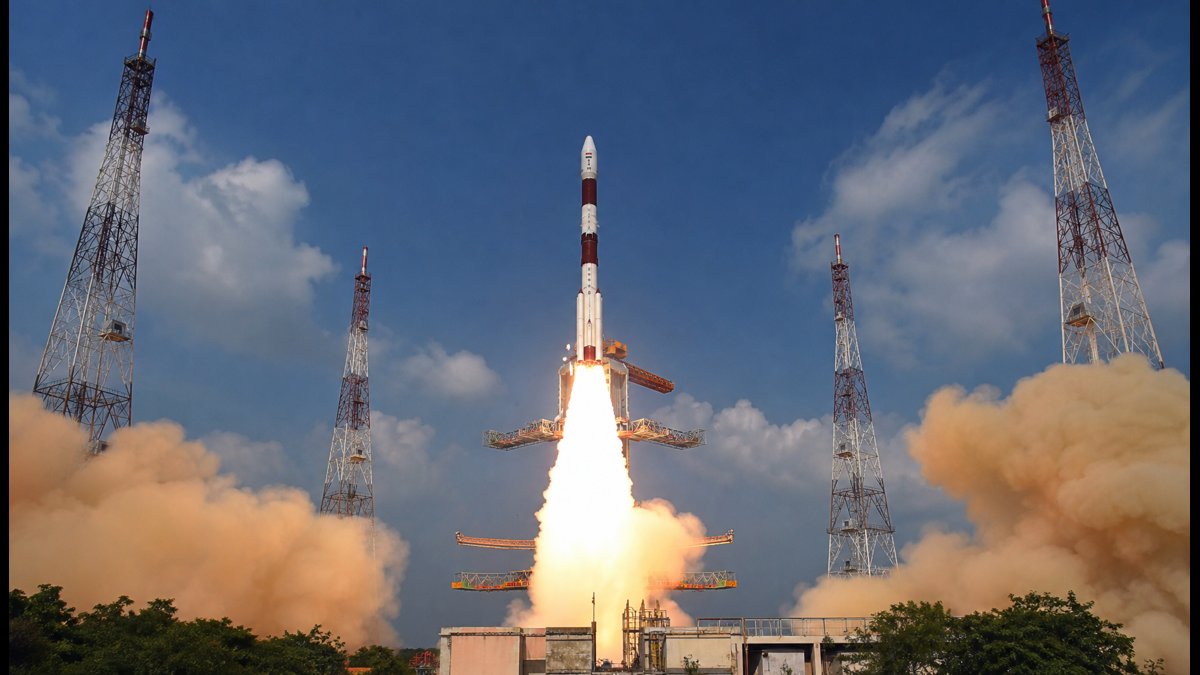
ISRO targets a late-night navigation boost tonight. GSLV-F18 is set for 11:51 pm IST on Friday, October 30, from Sriharikota’s Second Launch Pad, carrying NVS-03 for NavIC. Expect upgrades that influence smartphone positioning, Indian maps, logistics reliability, and timing for payments and networks.
ISRO’s webcast typically opens about 30 minutes before liftoff, with coverage listed from 11:20 pm. If weather or checks hold the count, airspace closure notices indicate nightly slots around 10:30 pm–2:30 am IST into early November, offering backup opportunities. Track final T‑0 on ISRO channels.

How to watch the ISRO NavIC NVS-03 launch tonight
Viewers can watch live on ISRO’s website and YouTube stream from Sriharikota’s Second Launch Pad. Expect liftoff at 11:51 pm, followed by GSLV’s standard ascent toward transfer orbit. Stay alert for last‑minute holds and resume cues on the official stream and news feeds.
What NVS‑03 adds to NavIC’s L1/L5 signals
NVS‑03 carries tri‑band navigation signals in L1, L5 and S bands, plus an indigenous rubidium atomic clock to strengthen continuity and accuracy. The L1 addition improves receiver compatibility. It also helps recover coverage gaps after ageing satellites and NVS‑02’s post‑launch orbit‑raising shortfall.
Why this matters for phones, maps and apps
L1 support enables faster fixes and lower power on mass‑market phones, while L5 benefits precision and resilience. Assisted NavIC features are already included in 3GPP standards, easing integration. Expect more India‑ready devices and apps to leverage combined L1/L5 for reliability in cities.
Impact on logistics, drones, emergency alerts and fintech
Vehicle trackers under AIS‑140 must support NavIC, improving fleet compliance and safety. Drones rely on robust Global Navigation Satellite System (GNSS) positioning for tracking and geofencing. India’s new cell broadcast alerts and NavIC‑anchored timing strengthen telecom and time‑stamping for payments and trading.
Hiring watch: GNSS, RF and embedded roles
Hiring is rising for GNSS algorithm engineers, RF test specialists, and embedded developers. Revise signal processing, Kalman filters, multipath mitigation, antenna design, and SDR workflows. Interview practice should include C or C++, Linux drivers, and integration testing. Hands‑on labs like IITTNiF can sharpen readiness quickly.
Students and job seekers should mark 11:51 pm IST, Friday, October 30, for the launch. If scrubbed, watch for backup slots within the nightly 10:30 pm–2:30 am IST window flagged by airspace notices. Use this window to explore NavIC skills and roles now gaining momentum.
