

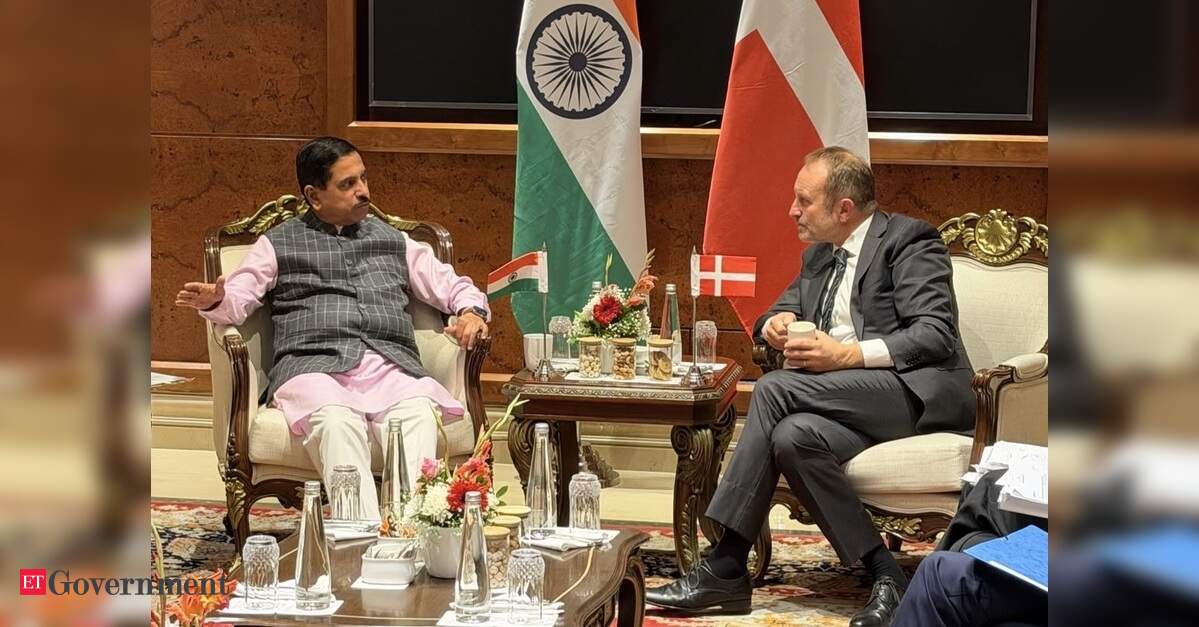
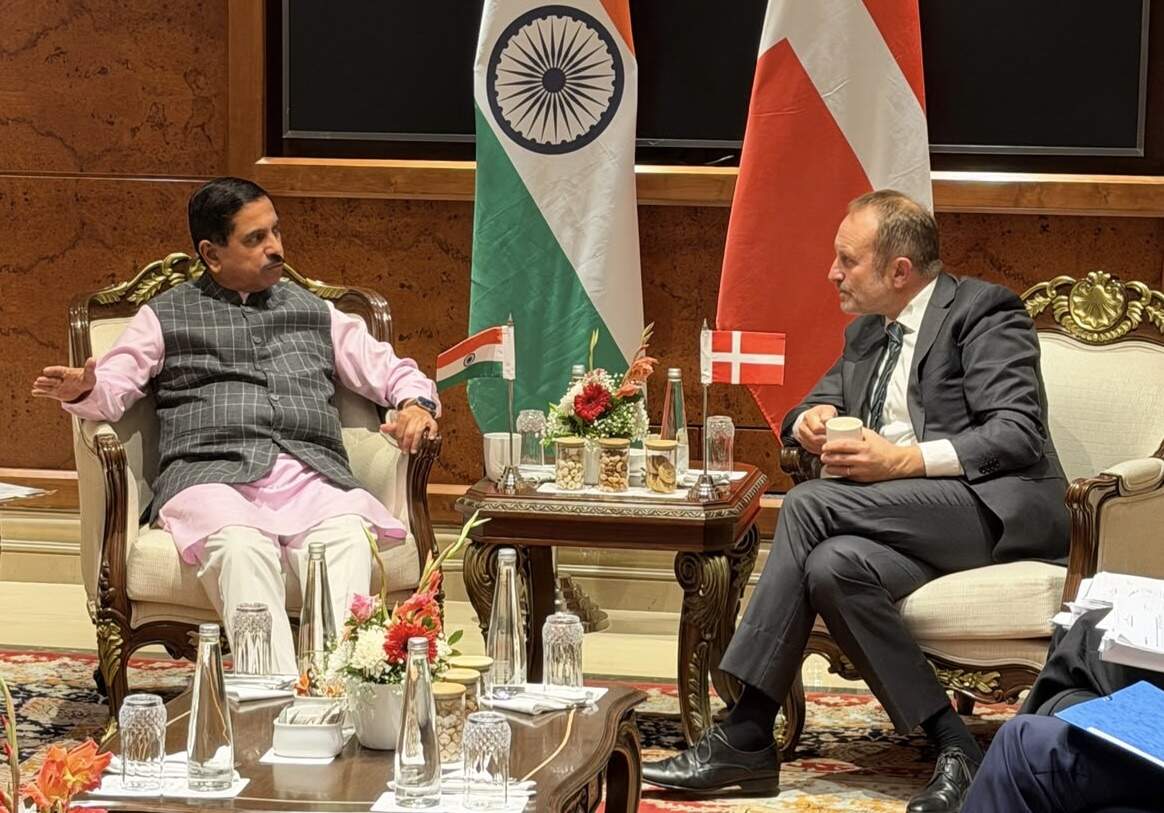
Denmark’s Minister for Business and Competitiveness, Martin Lidegaard, is on a high-profile two-day visit to India, holding discussions with senior government leaders, industry executives and international energy organisations to strengthen bilateral cooperation in renewable energy, maritime infrastructure, green shipping, industrial investment and emerging technologies.The visit, covering Mumbai on November 2 and New Delhi on November 3, comes as India and Denmark seek to expand their Green Strategic Partnership, established in 2020, and explore new commercial opportunities arising from the proposed India-European Union Free Trade Agreement.The Danish minister’s engagements reflect the growing economic and strategic importance of India-Denmark relations, particularly in sectors where India’s expanding market and infrastructure requirements complement Denmark’s expertise in renewable energy, maritime technologies and sustainable industrial development. The visit also highlights the increasing participation of Danish companies in India’s manufacturing, logistics, biotechnology and clean-energy sectors.In New Delhi on Tuesday, Lidegaard met Union Minister for New and Renewable Energy Pralhad Joshi to discuss opportunities for deeper cooperation in offshore wind energy, green hydrogen and the integration of renewable energy into electricity systems. He is also participating in the Bharat Renewable Energy Summit & Expo 2026 and the ninth Assembly of the International Solar Alliance (ISA), bringing Denmark’s experience in clean-energy technologies and international partnerships into discussions on India’s energy transition.“Denmark’s experience is clear: the green transition does not mean sacrificing economic growth. We have developed renewable energy and improved energy efficiency in a way that is internationally competitive,” Lidegaard said.
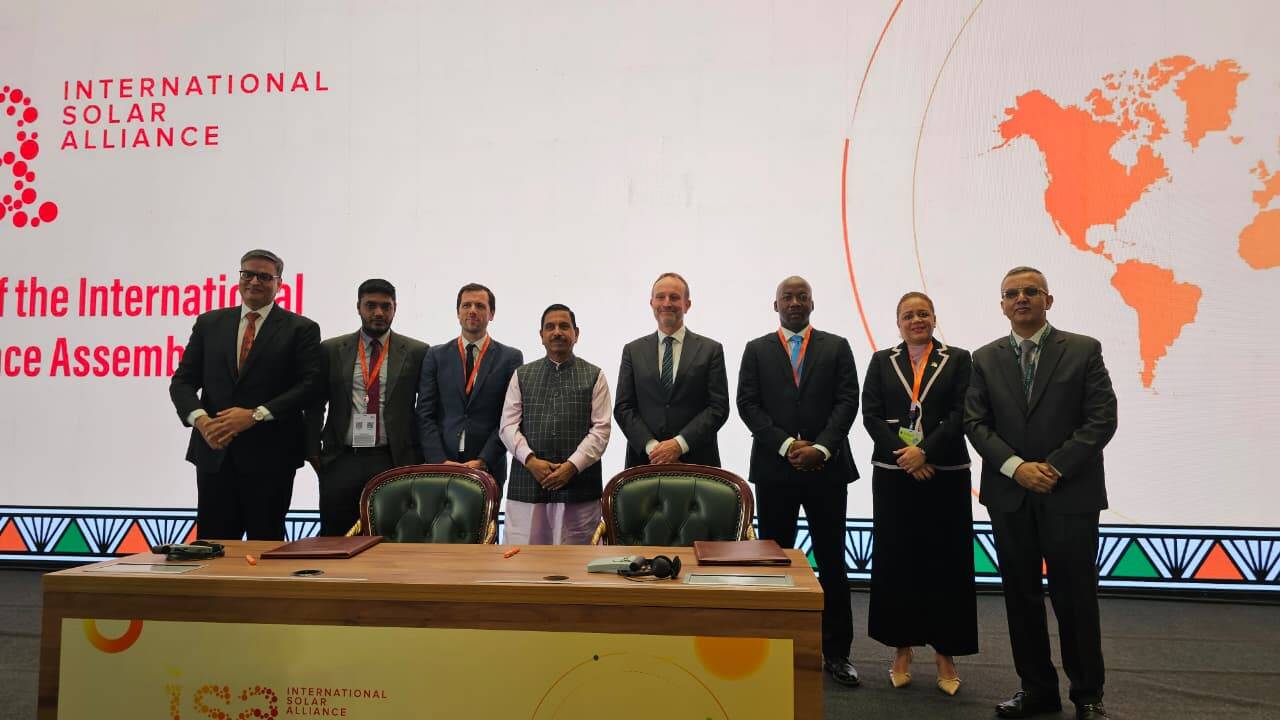
“Our energy partnership with India is one of Denmark’s largest with any country. India brings scale, ambition, and a rapidly expanding market. Denmark brings experience, technology, and a strong tradition of cooperation between government, business and research. Together, we can help build an energy future that is cleaner, more competitive and more secure.”Three decades of energy cooperation
India and Denmark have maintained cooperation in the energy sector for approximately three decades. One of the early milestones was Danish support for establishing the National Institute of Wind Energy in Chennai, which became an important institution for wind-energy research, testing and development in India.India now has nearly 60 GW of installed wind-power capacity, approximately eight times Denmark’s installed capacity. While the two countries differ considerably in the size of their energy markets, their partnership combines India’s scale and growing demand with Denmark’s technological experience and expertise in renewable-energy integration.Denmark’s Ambassador to India, Rasmus Abildgaard Kristensen, has been closely associated with efforts to strengthen bilateral cooperation across renewable energy, sustainable technologies, trade and investment. The minister’s visit provides further momentum to the diplomatic and commercial engagement being pursued by the Danish Embassy in New Delhi, particularly in building partnerships between Danish technology companies, Indian industries and government institutions.The ambassador’s role is particularly relevant as the Green Strategic Partnership moves beyond policy-level commitments towards greater commercial engagement, technology collaboration and investment. Denmark’s diplomatic and business presence in India has expanded alongside growing opportunities in clean energy, industrial efficiency, maritime infrastructure and sustainable development.At the Bharat Renewable Energy Summit & Expo 2026, Lidegaard opened Denmark’s country session, titled “A Green Transition through Sector Coupling”, highlighting the importance of integrating different energy systems to improve efficiency, competitiveness and energy security.The session brought together senior representatives from both countries, including the Danish Energy Agency and Danish companies, to examine how electricity generation, industrial energy consumption and other energy-intensive sectors can be connected through innovative technologies.Sector coupling is becoming increasingly relevant as countries expand their renewable-energy capacity. Integrating electricity with industrial processes, hydrogen production and other energy applications can help absorb variable renewable generation, improve system flexibility and reduce dependence on fossil fuels. For India, these technologies could become important as its electricity system accommodates growing shares of solar and wind power.India’s renewable expansion attracts international attention
Another important development during the New Delhi engagements was the launch of an International Energy Agency report examining India’s renewable-energy market, co-funded by Denmark.According to the Danish press material, India’s renewable-energy capacity has quadrupled over the past decade and now exceeds 300 GW. The report examines the policies and market developments underpinning this expansion, assesses the challenges that remain and identifies opportunities for further growth.The report’s significance extends beyond documenting installed capacity. India’s next phase of renewable-energy development will require substantial investments in transmission infrastructure, grid flexibility, energy storage and industrial integration. International partnerships can contribute technical expertise and investment, although their commercial impact will depend on implementation, financing conditions and the ability to scale technologies.Lidegaard’s participation in the ninth Assembly of the International Solar Alliance also reinforces Denmark’s involvement in international clean-energy cooperation. Denmark is the second-largest government contributor to the International Solar Alliance outside India. Its assistance has focused on capacity building, technical cooperation and institutional development, including support for solar-energy training programmes in developing countries.Under a DKK 20 million programme covering 2024–2026, Denmark has supported two Solar Technology and Application Resource Centres in Ghana and Tanzania. These centres are intended to strengthen technical capabilities through training for government officials, technicians and financial-sector professionals. Denmark has also supported a study on green hydrogen and funded a secondment to the ISA Secretariat.The Bharat Renewable Energy Summit, being held from November 2–5 at Bharat Mandapam, coincides with the ISA General Assembly and the fourth International Conference on Green Hydrogen, bringing together policymakers, investors, manufacturers and technology companies involved in the global energy transition.Mumbai engagements focus on shipping, investment and industrial partnerships
Lidegaard began his India visit in Mumbai on November 2, where his engagements focused on maritime infrastructure, green shipping, industrial investment and the opportunities emerging from closer economic cooperation between India and Denmark.Maharashtra occupies an important position in Denmark’s commercial relationship with India, with more than 60 Danish companies operating in the state across shipping, maritime technology, manufacturing and consumer goods.During his meeting with Maharashtra Governor Jishnu Dev Varma, the Danish minister discussed investment opportunities, maritime development, infrastructure and the potential implications of the proposed India-EU Free Trade Agreement.“Denmark and Maharashtra are two economies of roughly the same size with a lot to offer each other. More than 60 Danish companies are already present in Maharashtra and we expect commercial opportunities to expand with the coming EU-India free trade agreement,” Lidegaard said.He also visited APM Terminals Mumbai, known as Gateway Terminals India, at Jawaharlal Nehru Port. Operated by APM Terminals, part of the Danish Maersk Group, the facility represents a major example of Danish participation in India’s maritime and logistics infrastructure.Discussions at the terminal covered port operations, infrastructure development, efficiency improvements and opportunities to introduce greener technologies into maritime operations.Maersk is also exploring opportunities associated with the development of Vadhavan Port and has signed a memorandum of understanding with port authorities to examine potential cooperation.The maritime discussions are particularly relevant as India seeks to modernise its ports, expand logistics capacity and improve the efficiency of international trade. Denmark’s shipping and maritime technology industries could contribute to these objectives through port automation, energy-efficient operations and cleaner shipping technologies.L&T connection highlights historic industrial ties
An important engagement in Mumbai was Lidegaard’s meeting with Indian conglomerates, shipping companies and Danish maritime and defence businesses at Larsen & Toubro. The discussions addressed India’s industrial and maritime development, opportunities for commercial partnerships and the prospects for closer cooperation between Indian and Danish companies.The meeting carried historical significance. Larsen & Toubro was founded in Mumbai in 1938 by two Danish engineers, Henning Holck-Larsen and Søren Kristian Toubro. Over nearly nine decades, the company has grown into one of India’s leading engineering and infrastructure enterprises.During the visit, L&T Chairman S.N. Subrahmanyan was appointed Denmark’s Honorary Consul in Mumbai, adding an institutional dimension to Denmark’s commercial engagement with Maharashtra.Danish investments signal expanding economic engagement
The minister’s visit also follows several investment announcements involving Danish companies and financial institutions. In September 2026, Danish biotechnology company Novonesis announced an investment of approximately USD 670 million to expand its facility at Patalganga near Mumbai. The investment reflects the growing importance of India in Denmark’s industrial and biotechnology operations.In October, Impact Fund Denmark announced a USD 35 million investment in GreenCell Mobility, an Indian electric-bus company, linking Danish development finance with India’s transition towards cleaner urban transportation.Other Danish companies with manufacturing operations in Maharashtra include Danfoss, Hempel, Everllence and Alfa Laval, while Danfoss and Hove are preparing to establish new facilities. Together, these investments illustrate the breadth of Indo-Danish economic engagement, which increasingly extends beyond conventional trade into industrial technology, sustainable mobility, logistics, biotechnology and clean-energy infrastructure.Green Strategic Partnership enters a more commercially significant phaseLidegaard’s ongoing visit comes at an important stage in the evolution of India-Denmark relations. The Green Strategic Partnership established in 2020 created a framework for cooperation on sustainable development, renewable energy, environmental technologies and green economic growth. Six years later, the relationship is increasingly focused on translating institutional cooperation into commercially viable projects and long-term investments.The prospective India-EU Free Trade Agreement could further strengthen this process by improving market access and creating more predictable conditions for businesses, subject to the agreement’s final terms and implementation.For India, the immediate opportunities lie in accessing advanced technologies, attracting investment and strengthening domestic capabilities in renewable energy, shipping and industrial manufacturing. For Denmark, India’s expanding economy, infrastructure development and clean-energy ambitions offer a substantial market for Danish enterprises.As Lidegaard continues his engagements in New Delhi, the discussions are bringing renewed attention to the commercial and technological potential of the bilateral partnership. The longer-term significance of the visit will depend on how the opportunities identified in energy, maritime infrastructure and industrial cooperation translate into investments, operational projects and measurable economic outcomes.
