

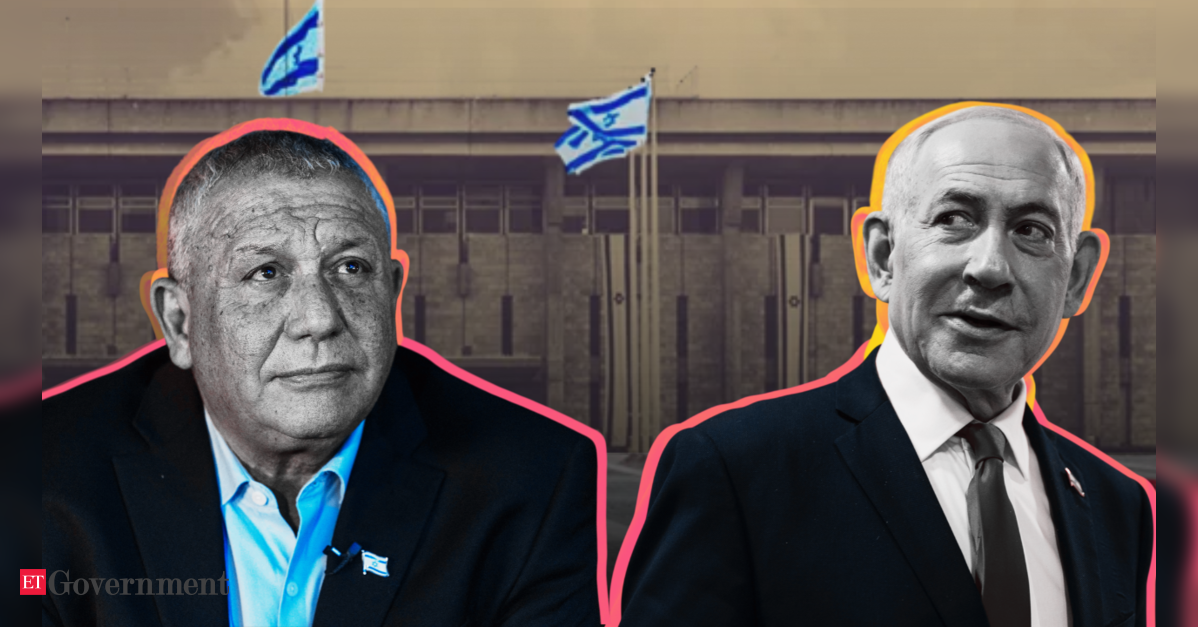
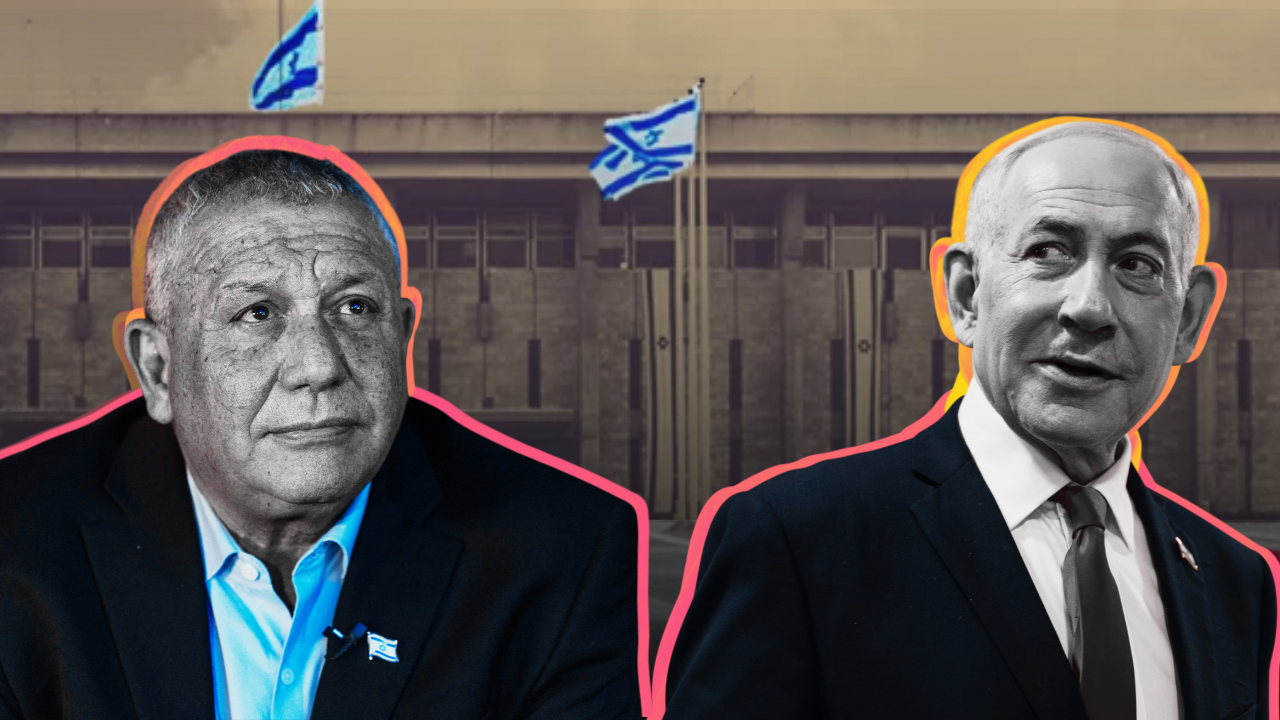
Israel’s political landscape has entered a potentially decisive phase following President Isaac Herzog’s decision on November 8 to entrust former military chief Gadi Eisenkot with the task of forming a new government.The development represents a significant setback for Benjamin Netanyahu, whose long political dominance has been closely associated with Israel’s increasingly assertive military and security policies.Eisenkot, leader of the Yashar party and former Chief of Staff of the Israel Defense Forces (IDF), received the recommendations of 67 members of the 120-seat Knesset, compared with 46 supporting Netanyahu. Although the numbers give Eisenkot a promising starting position, they do not guarantee that he can assemble a functioning coalition.He has 28 days to form a government, with a possible extension of 14 days. Until a new administration takes office, Netanyahu remains prime minister.The political transition, if completed, could have consequences extending well beyond Israel. With the Gulf conflict reshaping regional security, energy markets and diplomatic relationships, the prospect of a new Israeli leadership raises important questions about military escalation, negotiations with Iran, the future of Gaza and Israel’s relations with major strategic partners, including India.Eisenkot: A Military Strategist Rather Than a Political Outsider
Unlike many politicians who build their careers primarily through party organisations, Eisenkot brings decades of military experience to national politics. He served as Israel’s military chief from 2015 to 2019, overseeing operations against militant organisations and Iranian-backed military infrastructure.Eisenkot is closely associated with the military doctrine commonly described as the campaign between wars, involving intelligence-led operations, precision strikes and sustained efforts to prevent adversaries from accumulating advanced weapons. His approach has generally emphasised operational preparedness, intelligence superiority and carefully calibrated military force.This background makes it difficult to portray Eisenkot as a conventional peace candidate. He belongs to Israel’s security establishment and has consistently treated Iran and its regional allies as serious strategic threats. His differences with Netanyahu concern not necessarily the identification of those threats, but the political management of military operations, the relationship between military objectives and diplomatic strategy, and the accountability of national leadership.His participation in Israel’s wartime emergency government after the October 2023 Hamas attacks also gave him direct experience of political decision-making during a national security crisis. His subsequent criticism of Netanyahu’s handling of the war reflected concerns about strategic direction and the absence of clearly defined political objectives.What Eisenkot’s Leadership Could Mean for the Gulf War
The most consequential international question concerns Iran and the wider Gulf conflict. Eisenkot has never advocated abandoning Israel’s military pressure on Iran or accepting the expansion of Iranian military influence across the region. His record suggests that he would maintain Israel’s deterrence capabilities while potentially placing greater emphasis on coordinating military operations with diplomatic objectives.His earlier positions on Gaza provide useful evidence. In January 2024, Eisenkot questioned the feasibility of achieving an absolute military victory over Hamas and argued that negotiations were necessary to secure the release of hostages. In February 2025, he supported completing the hostage-ceasefire agreement while maintaining that the struggle against Hamas would continue.These positions suggest a leader willing to distinguish between tactical military achievements and sustainable political outcomes. Applied to Iran, such an approach could favour negotiations backed by credible military pressure rather than an open-ended campaign without a clearly defined settlement.However, there is insufficient evidence to conclude that Eisenkot would immediately end military operations against Iran. His position on the present Gulf conflict must be distinguished from his earlier statements about Gaza. His military background also makes it unlikely that he would accept an agreement perceived as leaving Israel vulnerable to Iranian nuclear weapons or missile attacks.Gaza, Regional Diplomacy and Relations with Arab States
Eisenkot has previously argued that military operations alone cannot produce lasting stability in Gaza. During a May 2024 parliamentary committee briefing, he advocated an alternative governing arrangement involving an international and regional coalition, with Egypt playing a leading role. He warned that military achievements would not translate into strategic success without a viable political alternative to Hamas.This approach could create opportunities for renewed cooperation with Egypt, Saudi Arabia, the United Arab Emirates and other regional governments. Such cooperation would be particularly important if Israel seeks to reduce tensions across the Gulf while preserving its security interests.Nevertheless, Eisenkot’s coalition composition could constrain his freedom of action. His supporters include parties with substantially different positions on Palestinian representation, military conscription and territorial policy. Consequently, a change in prime minister would not automatically produce a fundamental transformation of Israeli policy.Implications for India: Defence, Trade and Strategic Connectivity
For India, a potential Eisenkot government presents both continuity and opportunities for recalibration. Defence cooperation is unlikely to suffer substantially because the relationship is institutional rather than dependent exclusively on Netanyahu’s personal rapport with Prime Minister Narendra Modi.Indeed, Eisenkot has direct experience of engagement with India’s military leadership. In June 2017, during his tenure as IDF chief, he was scheduled to hold bilateral discussions with Indian Navy Chief Admiral Sunil Lanba on strengthening cooperation between the two armed forces.India and Israel elevated their relationship to a Special Strategic Partnership for Peace, Innovation and Prosperity during Modi’s February 2026 visit. The partnership covers defence, cybersecurity, emerging technologies, agriculture and innovation.An Eisenkot administration could continue these initiatives while bringing a distinctly military-strategic perspective to defence industrial cooperation, joint development and technology transfers.The wider regional implications are potentially more significant. India maintains important relationships with Israel, Iran and the Gulf monarchies. A reduction in regional hostilities could improve energy security, shipping conditions and the prospects for connectivity initiatives such as the India–Middle East–Europe Economic Corridor.Conversely, prolonged instability could disrupt trade routes, increase insurance and transportation costs, and complicate India’s diplomatic balancing between competing regional powers.A Change of Leadership, Not Necessarily of Strategic Direction
Eisenkot’s immediate challenge is domestic. His Yashar party secured 21 seats, while his four-party bloc controls 48. Netanyahu’s Likud remains the largest individual party with 27 seats, and the outgoing coalition commands 53. The support of Arab-led parties and potential negotiations with ultra-Orthodox factions will therefore be critical to Eisenkot’s prospects.The election has weakened Netanyahu, but it has not conclusively ended his political career. Should Eisenkot fail to assemble a coalition, Netanyahu could receive another opportunity.For the Gulf and India, the central question is whether Eisenkot can translate his experience as a military commander into a coherent diplomatic strategy. His past statements indicate greater scepticism towards promises of decisive military victory and stronger recognition of the need for political settlements. They do not establish that he would pursue a softer policy towards Iran.Israel may be approaching a change of leadership, but whether that produces a change in the course of the Gulf conflict will depend on coalition politics, military developments and the willingness of regional powers to negotiate.
