 “>
“>For Uttar Pradesh, skilling is no longer just a policy priority; it is an economic imperative. Over the past year, the Uttar Pradesh Skill Development Mission (UPSDM) has undergone a significant shift, moving away from a traditional scheme-based approach toward a technology-enabled, outcome-driven model aligned with modern industry needs.
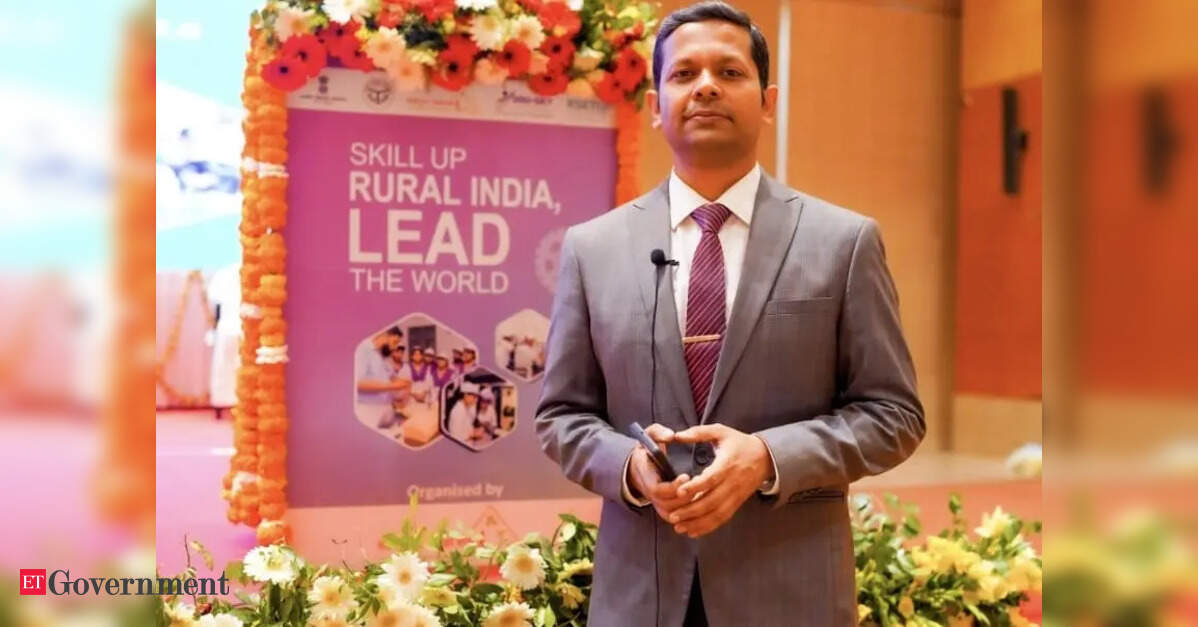
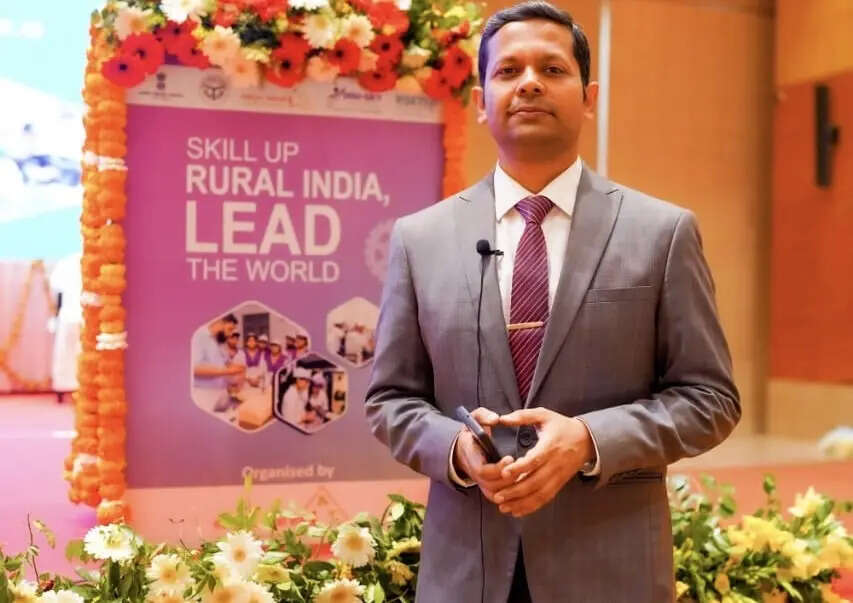
Pulkit Khare, Managing Director of UPSDM, is leading this transition with a focus on data-led governance, deeper industry integration, and future-ready expertise. In this conversation with Arpit Gupta, Khare outlines how the mission is leveraging AI, strategic partnerships, and grassroots outreach to build a more inclusive and demand-driven workforce ecosystem for the state.
Edited excerpts:
How has UPSDM evolved in the last 10 months, and what are the flagship initiatives that you believe are transforming the skill landscape in the state?
Over the past ten months, UPSDM has transitioned from a scheme-driven approach to a system-driven, outcome-oriented skilling framework. At the institutional level, we have strengthened internal capacity through structured training of officers and introduced data-led governance via the AI-powered Kaushal Darpan. For the first time, training partners have been graded based on performance and employability outcomes, and training targets are now allocated scientifically, aligned with district-level industrial demand.We have enhanced transparency and responsiveness through the Kaushal Call Center and a revamped digital interface, including the AI-enabled chatbot Kaushal Dost. On the skilling side, we have deepened industry integration through the Flexi Partners Scheme, expanded into new-age technology training, and embedded soft skills across all courses with support from premier institutions. Quality assurance has been strengthened through the Kaushal Drishti app, and access expanded via the Kaushal Disha digital platform. These initiatives together are positioning UPSDM as a technology-enabled, industry-aligned, and outcomes-focused skilling institution.UPSDM has signed several MoUs with private skilling organizations and CSR partners. Could you share how these collaborations are structured and how they are enhancing both reach and quality of training delivery across districts?
We have adopted a structured, multi-layered partnership model to improve both scale and quality of skilling.
First, we have onboarded knowledge partners such as IIIT Prayagraj, MNIT, IIT Roorkee, NIESBUD, and Bhartendu Natak Academy, who contribute to curriculum design, validation, and assessment—bringing academic rigor into the system. Second, we have engaged specialized private partners for soft skills, mapped district-wise to strengthen employability outcomes at scale. Third, and most importantly, we have expanded our Flexi Training Partner network from industry, where training is directly linked to employment, with cost reimbursement tied to hiring commitments.
This structured collaboration ensures that skilling is demand-driven, quality-assured, and directly linked to employment outcomes across districts.
With rapid changes in industry demand, how does UPSDM ensure that skill training programs remain relevant and aligned with current and future job opportunities, especially in sectors like digital tech, manufacturing and services?
Ensuring relevance in a rapidly evolving job market requires continuous industry engagement and dynamic course design. We have institutionalized regular curriculum upgradation, driven by inputs from both industry and academic partners. UPSDM maintains ongoing engagement with bodies such as ASSOCHAM, CII, and FICCI to track sectoral demand trends.
We have also empanelled over 40 specialized partners in emerging domains such as AI, robotics, drones, and EVs, and are leveraging modern lab infrastructure, particularly in ITIs, for hands-on training. Importantly, training target allocation itself is now linked to district-level industrial ecosystems, ensuring geographical and sectoral alignment.
This ensures that our skilling programs remain demand-driven, future-oriented, and closely aligned with real employment opportunities.
Beyond training completion, placement and employment outcomes matter most. What measurable results has UPSDM achieved in placing trained youth in sustainable jobs, and what innovations are being used to track long-term career success?
At UPSDM, we measure success not just by training numbers, but by sustained employment outcomes. We have strengthened placement efforts through structured employer engagement and targeted initiatives such as the Divyangjan Rozgar Abhiyan, which has facilitated around 2,000 placements.
More importantly, we have introduced a post-placement tracking and support system through our Kaushal Call Center, which maintains continuous engagement with trained candidates. This enables handholding, career guidance, and linkage to upskilling opportunities and job fairs. This shift from placement to career tracking allows us to focus on long-term employability, retention, and career progression—rather than short-term job outcomes.
Given the rise of automation and emerging technologies, what steps is UPSDM taking to integrate future-ready skills (such as AI, data analytics, renewable energy, etc.) into its curriculum and certification frameworks?
UPSDM has taken a proactive approach to embed future-ready skills across its entire skilling ecosystem. We have introduced a “Basic AI for All” module for both trainers and trainees, with certification, to build foundational digital and AI literacy.
In parallel, we have identified 192 job roles in emerging sectors and floated a dedicated RFP to roll out structured training programs in areas such as AI, EVs, drones, and advanced technologies. We have also invested in capacity building of our officers, ensuring institutional readiness to adopt and scale technology-led initiatives.
Further, through Project Praveen, we are extending skilling to school students (classes 9–12), where AI modules have been made mandatory, ensuring early exposure in alignment with NEP 2020. Our approach is to mainstream future skills—so that both the workforce and the institution are prepared for an AI-driven economy.
Uttar Pradesh has a diverse socio-economic profile. How is UPSDM scaling its programs to reach women, rural youth, differently-abled candidates and other under-represented groups, and what challenges remain?
Given the scale and diversity of Uttar Pradesh, ensuring equitable access to skilling opportunities is central to UPSDM’s mandate.
We have expanded outreach to rural youth, women, and Divyangjan candidates, with measurable improvements in participation. Women now constitute over 50% of trainees in several batches, while targeted initiatives like the Divyangjan Rozgar Abhiyan have delivered tangible employment outcomes. Geographically, we have ensured coverage across Aspirational Districts and Blocks, taking skilling to underserved regions. Additionally, we are launching special batches for zero-poverty youth, focusing on the most economically vulnerable groups.
While challenges remain in terms of awareness, mobility, and retention, our strategy is to combine targeted outreach with institutional support mechanisms. Going forward, our vision is to build an inclusive, demand-driven, and technology-enabled skilling ecosystem that ensures every youth—irrespective of background—has access to sustainable livelihood opportunities.