As Maharashtra sharpens its ambition of becoming India’s foremost investment destination, maritime infrastructure is emerging as a critical pillar of its long-term economic strategy.
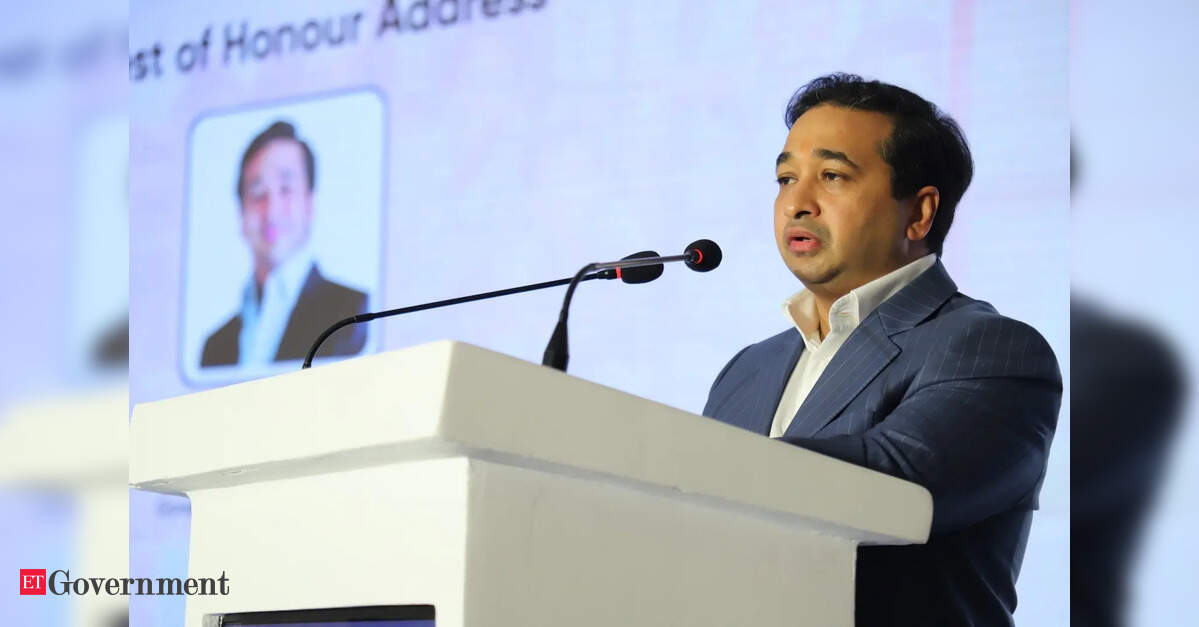
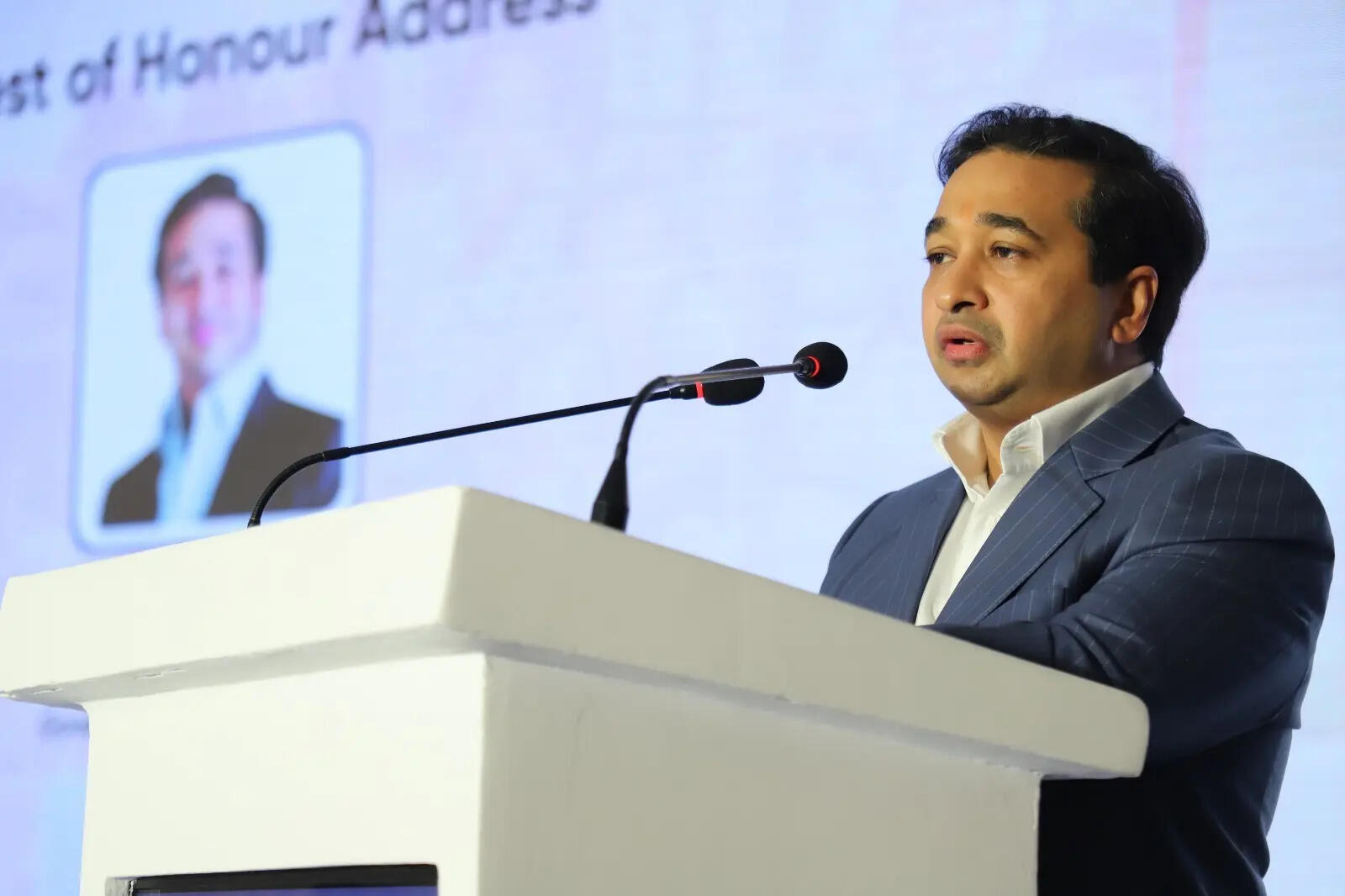
At the Maharashtra Business Summit & Awards 2026, organised by ETGovernment in Mumbai on April 23, Nitesh Rane, who attended the summit as Guest of Honour, outlined how the state plans to leverage its coastline, port network and policy reforms to build a globally competitive maritime ecosystem.
Held at a time when Maharashtra is seeking to position itself as India’s first trillion-dollar sub-national economy, the summit brought together policymakers, investors, diplomats and business leaders to discuss the state’s next phase of growth.
While Chief Minister Devendra Fadnavis had earlier spoken about infrastructure-led expansion, logistics corridors and digital ecosystems, Rane’s address placed maritime development at the centre of that broader economic transformation. His message was unequivocal: Maharashtra does not intend to remain a passive participant in India’s maritime expansion.
“We do not want to stand behind, we want to lead the way,” Rane said, underlining the government’s determination to make Maharashtra the country’s leading maritime hub.
To demonstrate that intent, the minister highlighted the state government’s decision to introduce a dedicated shipbuilding, ship repair and shipbreaking policy within the first 100 days of the current administration. The move, he said, was aimed at creating policy certainty for investors and positioning Maharashtra as an attractive destination for global maritime capital.
The state’s natural advantages are considerable. Maharashtra has nearly 720 kilometres of coastline and a network of 48 ports, including major and minor ports. Yet Rane acknowledged that much of this infrastructure remains underutilised.
“Many of the ports are not running at 100% capacity,” he said, noting that operational inefficiencies, technological gaps and inadequate logistics integration have prevented Maharashtra from fully exploiting its maritime potential.
Correcting this imbalance, he suggested, is central to the state’s economic future.
A major component of this strategy is Vadhvan Port, which Rane described as one of the most transformative infrastructure projects underway. The deep-draft port is expected to significantly expand cargo-handling capabilities and strengthen Maharashtra’s position in global trade routes at a time when India is attempting to expand exports and attract global manufacturing supply chains.
But the minister argued that ports alone cannot create a maritime economy. Maharashtra, he said, is working to build a broader industrial ecosystem that includes shipyards, repair facilities and ancillary industries.
Rane revealed that the state government is identifying land for what could become one of India’s largest shipyards—an initiative that could generate substantial employment while stimulating industrial growth in coastal districts.
International partnerships are also being actively pursued to accelerate this transition. The minister said Maharashtra has engaged with countries such as Netherlands, Sweden and Finland to bring advanced maritime technologies, operational expertise and global best practices into the state.
These collaborations, he noted, could help improve efficiency and reduce development timelines. Rane also highlighted a sector that has historically received limited policy attention in India—water transport. “We have not explored it at all,” he said while discussing the untapped potential of coastal and inland waterways.
To address this gap, Maharashtra is working on initiatives such as the Mumbai Water Metro, which aims to reduce congestion in one of the world’s most densely populated urban regions by creating alternative commuter routes through waterways.
He also pointed to emerging opportunities in sustainable maritime transport, including electric boats and green mobility solutions that could align the state’s maritime ambitions with broader climate objectives. Throughout his address, Rane repeatedly stressed that the government intends to function as an enabler rather than a bureaucratic obstacle.
“We are here to answer all the questions… and ensure your factory is set up in the time given,” he said, signalling a push toward faster approvals and a more responsive regulatory environment.
The broader significance of his remarks lies in how Maharashtra is redefining maritime infrastructure—not simply as a transport asset, but as a catalyst for industrial growth, exports, logistics efficiency and job creation.
As global trade routes evolve and India seeks greater integration into international supply chains, Maharashtra appears determined to ensure that its ports, shipyards and waterways become central to that transformation.