
As India prepares for Census 2027, the country’s first fully digital census exercise, Uttar Pradesh is at the centre of one of the world’s largest administrative and data collection operations.
With more than 5.25 lakh personnel deployed across the state, the exercise will combine digital enumeration, geo-tagged mapping, mobile-based data collection and for the first time, optional self-enumeration by citizens. The census will also include caste enumeration in the population phase, making it one of the most closely watched governance exercises in recent decades.
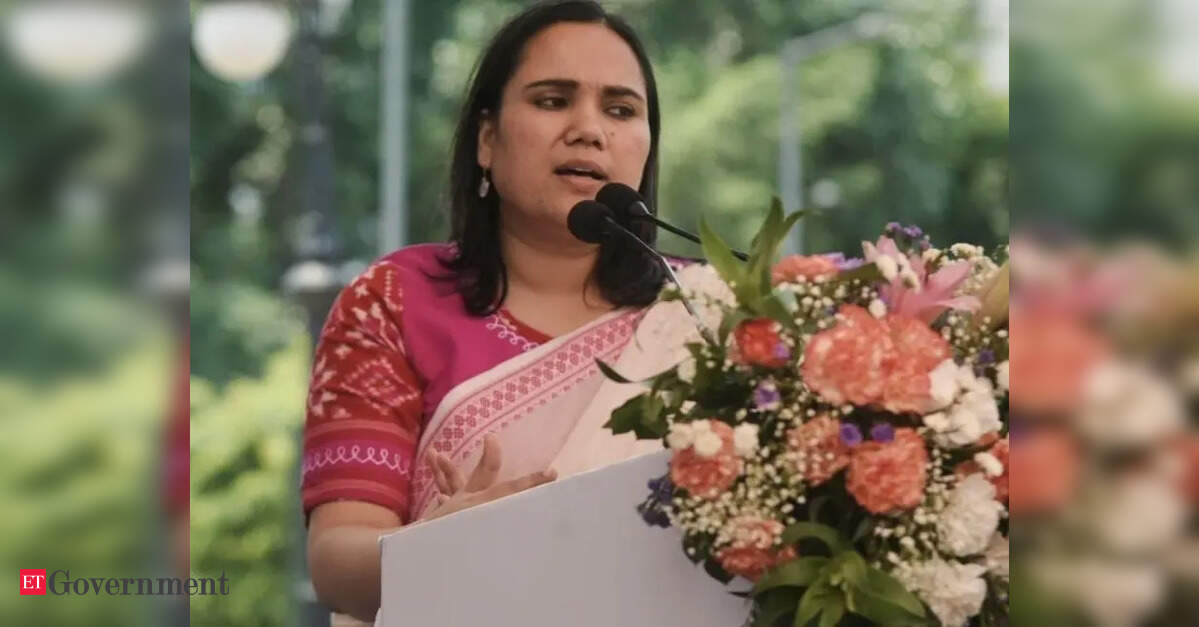
In an interview with ETGovernment’s Arpit Gupta, Sheetal Verma, Director and Chief Principal Census Officer, Uttar Pradesh, speaks about the opportunities and challenges of conducting a digital census in India’s most populous state, concerns around privacy and misinformation, rural-urban participation patterns and why census data remains the backbone of policymaking and nation-building.
Edited excerpts:
Census 2027 is being described as India’s first fully digital census. What are the biggest opportunities and challenges in implementing such a massive digital exercise in a state as large and diverse as Uttar Pradesh?
Census is not merely a headcount; it is one of the country’s largest demographic exercises and the foundation for governance planning. India’s census has always been conducted in two phases. The first is the House Listing Operations (HLO), which focuses on housing conditions and household amenities, while the second phase is population enumeration, where individual demographic details are collected.
What makes Census 2027 historic is that it will be India’s first fully digital census. There are four major digital innovations this time.
First, the entire human resource management process has been digitised through the Census Monitoring and Management System (CMMS). Since Uttar Pradesh alone requires more than five lakh personnel for field operations, managing deployment, training and monitoring manually would have been extremely difficult.
Second, the geographical mapping process has become digital. Earlier, census blocks were manually drawn, increasing the possibility of areas being left out. Now, the entire state has been digitally mapped into standardised House Listing Blocks based on natural contours, roads and railways, ensuring much more accurate geographical coverage. Third is self-enumeration, where citizens can voluntarily fill out their census details online. This is a major shift because people often complained earlier that enumerators either did not visit or recorded information inaccurately.
The fourth innovation is digital data collection through an offline mobile application. Enumerators can collect data even in areas with poor connectivity and later sync it to central servers. This means data processing will happen in near real time, allowing much faster availability of census data compared to previous exercises. The biggest challenge, however, remains scale. Uttar Pradesh is geographically vast and socially diverse, and ensuring complete population as well as territorial coverage is an enormous administrative task.
For the first time, citizens are being given the option of digital self-enumeration. What have been the biggest learnings from this initiative so far?
The response has shown that citizens are willing to participate digitally if the process is simple and trustworthy. During the self-enumeration window, people could fill out a standardised questionnaire online and receive an 11-digit alphanumeric self-enumeration ID. Importantly, self-enumeration is optional. Even after citizens fill the form online, an enumerator still visits the household. Residents can either confirm their submitted information, modify it, reject it and start afresh, or ask the enumerator to freeze the entries as they are.
One key learning is that urban and rural responses differ significantly. Interestingly, rural participation has been more welcoming. People in villages often believe that accurate data collection improves access to amenities and welfare schemes. In urban areas, especially NCR regions, the challenges are greater. Many households remain inaccessible because both working adults are away during the day. There is also more apprehension about data sharing, taxation concerns and misinformation.
So far, more than 40 lakh people in Uttar Pradesh have opted for self-enumeration. Districts such as Auraiya, Sonbhadra, Moradabad, Azamgarh and Pilibhit have shown particularly strong participation.
Census 2027 will also include caste enumeration. How is your department preparing to ensure accuracy, sensitivity and public trust during this exercise?
Caste enumeration will be part of the second phase, the population enumeration phase in February 2027, where individual demographic attributes such as caste, religion, literacy, occupation and mother tongue will be recorded. The methodology for caste enumeration will be formally communicated in due course, but one thing is absolutely clear: confidentiality is fully protected under the Census Act.
Individual-level census data is never shared, not even between government departments. For example, census authorities can provide aggregate statistics, such as the number of households lacking water connections in a village, but they cannot disclose household-specific information.
The same principle applies to caste data. Household and individual details remain confidential and are stored securely. In fact, even officials handling the process cannot access personal-level data in a manner that compromises privacy. Public trust depends on confidentiality, transparency and proper communication, and those remain central to the exercise.
You have said census data is the foundation of policymaking. How does better demographic data improve governance?
Every policy requires a reliable denominator. Without accurate population data, governments rely on projections or proxy estimates from smaller surveys. Census data provides the baseline for virtually every major welfare and development programme such as housing, sanitation, drinking water, education, food distribution and healthcare.
It also helps in urban planning and migration analysis. There is a common assumption that migration is primarily rural-to-urban, but census data often reveals substantial rural-to-rural migration linked to agriculture and seasonal employment. Beyond policymaking, every major survey in India including NFHS, NSSO and the Sample Registration System depends on census data for sampling frameworks and benchmarking. In that sense, the census underpins the entire statistical architecture of governance.
Uttar Pradesh has deployed more than 5.25 lakh personnel for census work. How are you ensuring consistency and quality across districts?
Training is one of the most complex parts of the operation because census work is highly technical and definition-based. We follow a cascading training model. Officials from the census directorate first undergo national-level training in Delhi. A selected team of around 300 master trainers was then trained in Lucknow through residential programmes.
These master trainers returned to their districts and trained nearly 7,000 field trainers. Finally, the field trainers conducted district-level classroom training sessions for enumerators and supervisors across Uttar Pradesh. Each enumerator covers a limited number of households over a 30-day period, so the workload itself is manageable. The challenge is ensuring conceptual clarity and maintaining continuity in deployment.
Another practical challenge is reluctance among some personnel to undertake census duties, particularly in urban districts. However, census work is a statutory national duty under the Census Act, and it remains one of the most important public service responsibilities in governance.
Data privacy has become a major concern globally. What safeguards are in place to ensure confidentiality?
The Census Act provides complete legal protection to personal information collected during the exercise. No Aadhaar numbers, bank account details or OTPs are collected during census operations. Citizens only provide their self-enumeration ID, if applicable. Additionally, enumerators carry official appointment letters embedded with QR codes that can be verified by residents or Resident Welfare Associations to confirm authenticity. The data itself is encrypted and securely stored. Census information is used only in aggregate statistical form. Individual-level information is never disclosed publicly or shared with departments. Confidentiality is one of the strongest pillars of the census process.
Having worked in district administration as well as census operations, how has field experience shaped your approach?
Field experience teaches you that census is ultimately about people, not just numbers. The challenges are very different across regions. Rural communities are generally cooperative and participatory because they directly associate census data with development outcomes. Urban areas present different administrative challenges including mobility, gated communities, working households and greater scepticism about data collection. Field administration also teaches you the importance of communication. Enumerators often work in difficult summer conditions and face resistance despite performing an important national duty. Public cooperation becomes critical to the success of the exercise.
Young officers often see census work as a statistical exercise. Why do you believe it is central to nation-building?
Census operations are among the most important pillars of governance because every major policy, welfare programme and planning exercise ultimately depends on accurate demographic data. Even in advanced economies, census exercises continue despite technological advances because no other process captures such comprehensive population-level information.
For a country as large and diverse as India, census data shapes everything: resource allocation, social justice measures, infrastructure planning, urbanisation strategy and welfare delivery. It is both an administrative exercise and a nation-building exercise because it ensures that every individual and every settlement is counted and represented in policymaking.
Finally, what message would you like to give citizens participating in Census 2027?
When an enumerator visits a household, citizens should remember that the person is performing an important national duty, often under difficult weather conditions. People should cooperate, answer truthfully and avoid apprehensions regarding misuse of information. Census data is collected purely for statistical and developmental purposes and individual information remains confidential.
Citizens should also stay alert against fraud. Genuine enumerators will never ask for Aadhaar details, bank information or OTPs. Their credentials can always be verified through the official QR-coded appointment letters.