India’s economic engagement with Latin America has traditionally remained far below its potential. Geography, limited connectivity and a longstanding tendency to view the region primarily through the prism of commodity trade have constrained the relationship.
But the global scramble for critical minerals, coupled with growing concerns over energy security and supply-chain concentration, is creating a compelling reason for New Delhi to fundamentally rethink its approach to Latin America.
The strategic equation is straightforward. India wants to become a major manufacturing power in electronics, electric vehicles, renewable energy, defence, aerospace, semiconductors and advanced technologies. All these sectors require enormous quantities of critical minerals—lithium, copper, nickel, cobalt, graphite, rare earth elements and several other materials.
Yet global mining, and particularly processing, is concentrated in a relatively small number of countries, with China occupying an extraordinarily influential position across several mineral supply chains. Latin America offers India an opportunity to diversify that exposure.
The region possesses some of the world’s most important deposits of lithium and copper, alongside substantial reserves of oil and gas and considerable potential in other strategic minerals. Argentina, Bolivia and Chile constitute the so-called “Lithium Triangle”; Chile and Peru are global copper powerhouses; Brazil possesses significant mineral resources, including rare earths; and Venezuela and Guyana possess enormous hydrocarbon potential.
The question for India is therefore no longer whether Latin America matters. It is whether Indian companies can establish a sufficiently large presence before the next phase of global competition for these resources intensifies.”
India has already taken some important steps. In January 2024, Khanij Bidesh India Limited, or KABIL, signed an agreement with Argentina’s state-owned CAMYEN for exploration and development of five lithium blocks in Catamarca province. The agreement represented India’s first lithium exploration and mining project undertaken by a government company overseas.
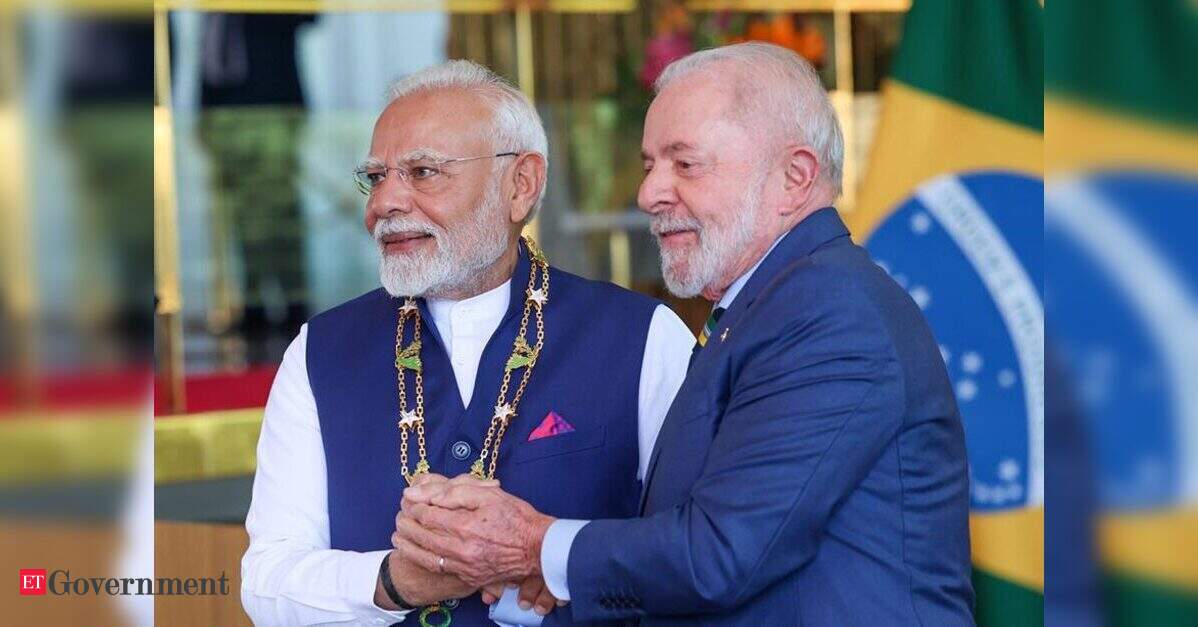
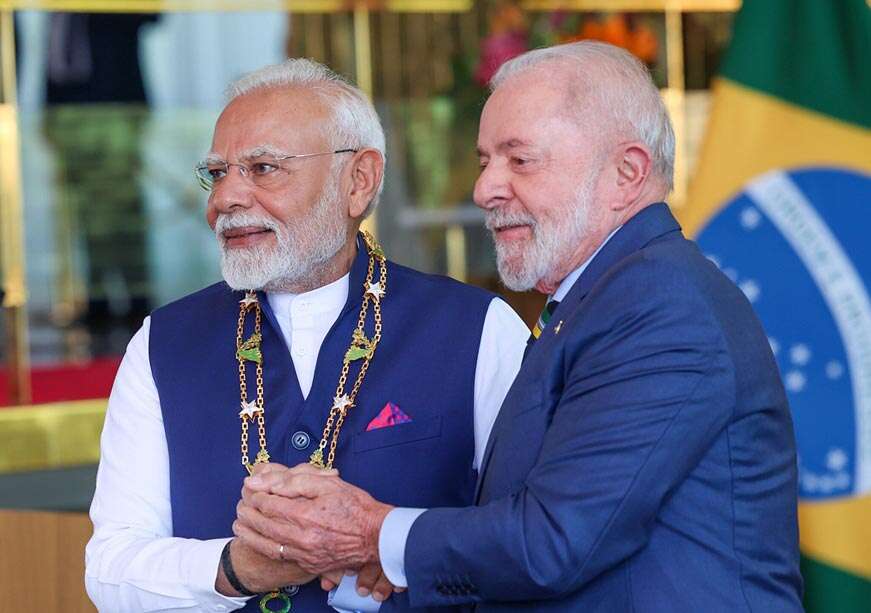
The relationship with Brazil is also moving towards minerals and energy. During Prime Minister Narendra Modi’s state visit to Brazil in July 2025, the two sides explicitly identified critical minerals as essential to economic development, national security and clean-energy technologies. India and Brazil called for collaboration involving public and private companies across mineral exploration, mining, beneficiation, processing, recycling and refining. They also encouraged energy companies to explore joint projects in offshore oil and gas fields.
This is important because securing a mine is only one part of the challenge. China’s strength comes not merely from access to mineral deposits but from its extensive capabilities in processing, refining, manufacturing and the downstream industrial ecosystem. India therefore needs to think in terms of complete value chains rather than simply securing shipments of ore.
Recent developments suggest that Indian companies are beginning to think more ambitiously. Coal India is exploring the acquisition of a Canadian company’s unit holding lithium assets in Chile, according to Reuters. Coal India and the Chilean subsidiary have also jointly applied for a lithium extraction licence. If successful, such transactions could substantially broaden India’s overseas mineral footprint beyond the existing lithium agreement in Argentina.
The opportunity extends beyond minerals to hydrocarbons.
Venezuela’s Acting President Delcy Rodríguez undertook an official working visit to India from June 3 to June 7, 2026, accompanied by a high-level delegation. Her meeting with Prime Minister Modi placed energy and critical minerals prominently on the bilateral agenda.
“Happy to meet with the Acting President of Venezuela, Ms. Delcy Rodríguez. We had extensive discussions on expanding our cooperation in energy, critical minerals, technology, agriculture, health and people-to-people ties,” Modi said after their meeting. He described Venezuela as “a valued partner in Latin America” and emphasised the importance of the relationship for the Global South.
The timing was significant. India had become the second-largest importer of Venezuelan oil in May 2026, purchasing about 427,000 barrels per day, according to Reuters. More importantly, India is looking beyond purchases of crude. ONGC Videsh is preparing to assume operatorship of two Venezuelan oil blocks under the country’s revised petroleum framework. The Indian company already has stakes in the San Cristobal and Carabobo-1 projects.
This transition—from buyer to investor and operator—is precisely what India should attempt across Latin America.
China arrived much earlier
There is, however, a formidable competitor. China understood Latin America’s strategic value much earlier and has spent decades building relationships involving infrastructure, commodities, finance, mining and energy.
Venezuela illustrates the scale of this engagement. Chinese policy banks became major lenders to Caracas, while China developed deep commercial links with Venezuela’s petroleum sector. A January 2026 assessment by the US-China Economic and Security Review Commission noted that Venezuela had received more Chinese policy-bank lending than any other Latin American country and that China remained deeply connected to Venezuelan oil.
The implications extend well beyond Venezuela. China’s presence across Latin American commodity and infrastructure markets has given Beijing commercial relationships and strategic leverage in a region containing resources increasingly essential to the technologies of the 21st century.
But the geopolitical environment is changing.
The United States has become increasingly concerned about dependence on Chinese-controlled mineral supply chains, while the European Union is actively developing alternative critical-mineral partnerships.
The EU’s Global Gateway programme, for instance, explicitly supports lithium and copper value chains in Argentina and Chile, covering not merely extraction but infrastructure, research, processing, skills and environmental standards. Its trade framework with Chile also explicitly links economic cooperation with critical raw materials and supply-chain de-risking.
India should read these developments carefully. Critical minerals are ceasing to be ordinary commodities. They are becoming instruments of economic security and geopolitical influence.
It would nevertheless be risky for India to construct its strategy on the expectation that China will simply withdraw from Latin American mining and energy assets. Beijing has invested enormous diplomatic and commercial capital in the region and is unlikely to abandon strategically valuable resources without compelling economic or political reasons.
But individual Chinese investments can be restructured, divested or scaled down. Political changes can alter investment conditions. Western pressure could reshape ownership structures in certain markets. Companies may sell assets because of debt, regulatory difficulties or changing commercial priorities. Whenever viable assets become available, Indian companies should possess the financial capacity, technical expertise and diplomatic backing to evaluate them quickly.
That requires a more coordinated strategy.
India’s state-owned enterprises—KABIL, ONGC Videsh, Coal India, NMDC, Hindustan Copper and others—can play an important role, but the scale of the requirement is too large to be met by public-sector companies alone. Indian private-sector groups involved in metals, energy, batteries, automobiles, electronics and renewable energy should increasingly consider equity investments, joint ventures and long-term offtake arrangements in Latin America.
The objective should not merely be to ship lithium or copper to India. Partnerships could include local processing, refining, technology transfer, infrastructure and eventually manufacturing. Such an approach would also be more attractive to Latin American governments, many of which understandably want to move beyond being exporters of raw commodities.
Prime Minister Modi’s diplomatic engagement has already created political momentum. His July 2025 tour included Trinidad and Tobago, Argentina and Brazil, while India’s engagement with Venezuela has subsequently accelerated. During Modi’s visit to Argentina, mining, oil and gas and renewable energy were specifically identified among the areas for expanding cooperation. India and Brazil have similarly placed minerals and energy at the centre of their strategic partnership.
The next stage must therefore be commercial.
India cannot build a globally competitive electronics industry, an indigenous defence-industrial complex, a large EV ecosystem and hundreds of gigawatts of renewable-energy capacity while remaining excessively dependent on concentrated external supply chains for the materials underlying these industries.
For decades, India’s energy diplomacy was primarily about securing crude oil. In the coming decades, energy security will increasingly encompass lithium, copper, nickel, graphite, rare earths and other strategic materials alongside petroleum and natural gas.
Latin America is one of the few regions capable of supplying both.
For New Delhi, therefore, the opportunity is larger than bilateral trade. India should aim to become a long-term investor in Latin America’s mines, oilfields, processing facilities and energy infrastructure. China’s early entry demonstrates what sustained strategic investment can achieve. The United States and Europe are now responding to that reality.
India should not wait for China to leave. It should build its own position alongside the existing players—and be prepared to move rapidly whenever strategically important assets become available. In an era when access to minerals increasingly determines industrial competitiveness and strategic autonomy, Latin America could become one of the most consequential pillars of India’s economic and resource security.