In 2025, India’s economic governance entered a decisive phase of reform characterised by institutional rationalisation, simplification of regulation, expansion of support for enterprises and labour, and structural policy innovations aimed at enhancing competitiveness, inclusivity, and growth outcomes.
The Government of India’s comprehensive reform agenda reflected both systemic consolidation and forward-looking structural recalibration, underscoring “outcome-driven governance” over mere expansion of regulatory frameworks.
At the macroeconomic level, these reforms contributed to very strong GDP growth, the lowest unemployment in months, and a resilient export performance. According to official GDP estimates released in late 2025, India’s economy expanded robustly: real GDP grew by 8.2 per cent in the second quarter of FY 2025-26.
Labour Reform: Modernisation and Expansion of Worker Protection
Among the most consequential changes in 2025 was the full implementation of the Four Labour Codes, constituting the most significant overhaul of India’s labour regime since independence. These codes consolidated 29 pre-existing labour laws into a more streamlined framework covering wages, industrial relations, social security, and occupational safety.
Prime Minister Shri Narendra Modi articulated the reform’s dual intent—strengthening worker protections while boosting ease of doing business—in unequivocal terms.
In a PIB statement, he described the Codes as “one of the most comprehensive and progressive labour-oriented reforms since Independence” and emphasised their empowerment of workers and simplification of compliance. Importantly, he said:
“Shramev Jayate! Today, our Government has given effect to the Four Labour Codes. It is one of the most comprehensive and progressive labour-oriented reforms since Independence. It greatly empowers our workers. It also significantly simplifies compliance and promotes Ease of Doing Business.”
“These Codes will serve as a strong foundation for universal social security, minimum and timely payment of wages, safe workplaces and remunerative opportunities for our people, especially Nari Shakti and Yuva Shakti,” he added. This statement reflects a reform philosophy that links labour empowerment and productivity with structural economic growth.
Tax and Regulatory Simplification: Next-Gen GST and Income-Tax Reform
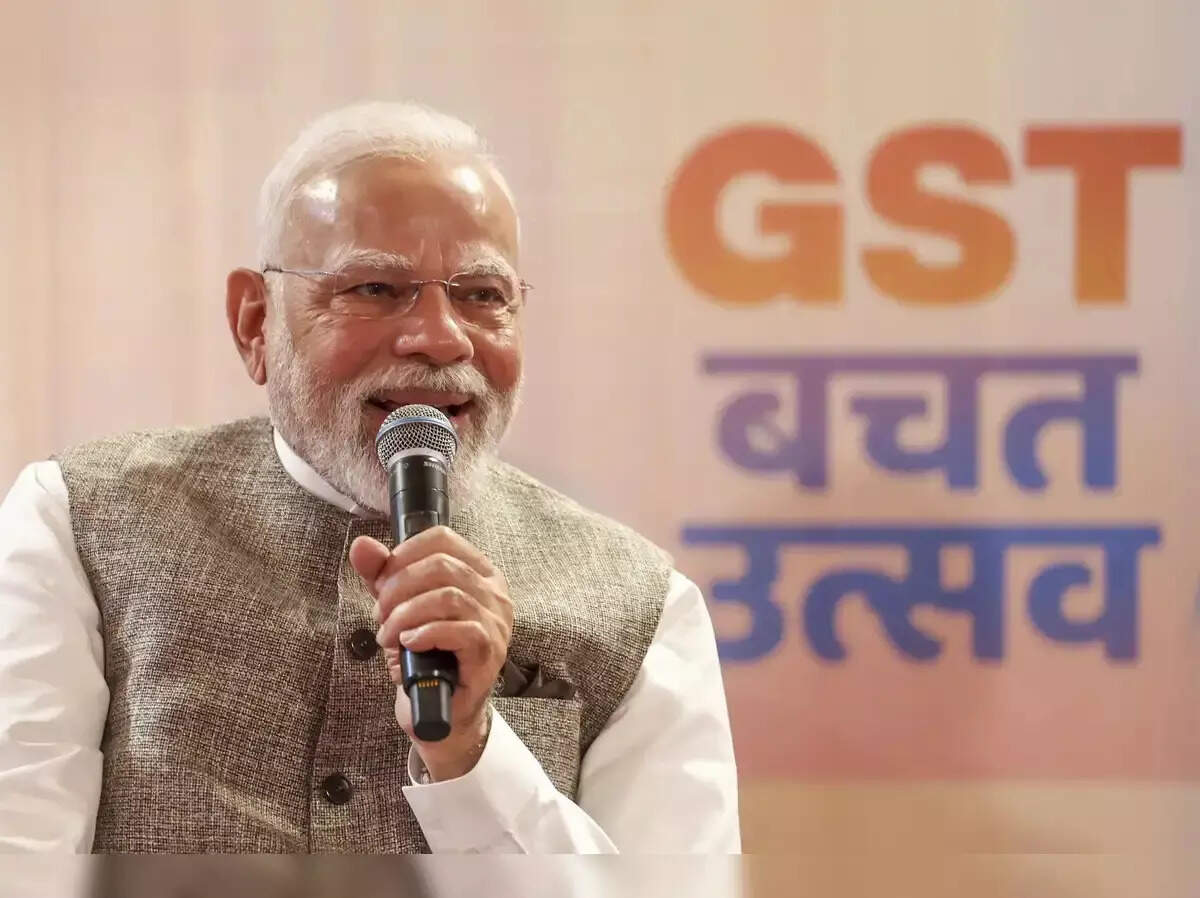
2025 witnessed notable tax regime reforms designed to simplify compliance and broaden the tax base. The Next-Gen GST framework modernised India’s indirect tax architecture, reducing burdens on taxpayers and expanding the taxpayer base to approximately 1.5 crore business entities, thereby enhancing both compliance and revenue stability.
Further, Parliament passed the Income-tax Act, 2025, replacing the six-decades-old Income-tax Act, 1961, with a modernised statute aimed at simplification, digital-first procedures, and reduced litigation. The new Act rationalised tax processes through a unified “Tax Year” concept and retained key benefits like a ₹12 lakh basic exemption, while significantly streamlining the statute’s structure.
Enterprise Support and Export Promotion
The Government of India also institutionalised direct measures to support exports and micro, small and medium enterprises (MSMEs) through the Export Promotion Mission, backed by over ₹25,060 crore in targeted support. This initiative integrated finance, compliance facilitation, and market access for first-time and existing exporters, thereby aligning export enhancement with domestic economic diversification.
On the macro front, Prime Minister Narendra Modi reflected on India’s growth momentum and the role of such pro-enterprise policies:
“The 8.2% GDP growth in Q2 of 2025-26 is very encouraging. It reflects the impact of our pro-growth policies and reforms. It also reflects the hard work and enterprise of our people. Our government will continue to advance reforms and strengthen the Ease of Living for every citizen.”
This formal expression underscores a key theme of 2025: reforms were designed not as ends in themselves but as enablers of broader economic participation and quality of life improvements.
Governance Simplification and Digital-First Implementation
Across sectors, reforms in 2025 emphasised predictability and reduced compliance burdens. Policies increasingly utilised digital systems to streamline procedures and lower frictions for citizens and businesses. This shift marked a maturing of governance philosophy: from expanding regulatory constructs to ensuring efficient delivery and measurable outcomes.
Emerging Structural Legislation Beyond Core Economy
Several other significant legal instruments were passed or advanced in 2025, indicating a holistic structural reform trajectory. For instance, the Viksit Bharat–Guarantee for Rozgar and Ajeevika Mission (Gramin) Act, 2025 replaced the older rural employment guarantee scheme with a revised statutory framework oriented toward rural employment and infrastructure, while aligning with Viksit Bharat @2047 economic goals.
Contextualising 2025 Within Broader Growth Goals
The cumulative effect of these reforms was reflected in concurrent economic indicators: sustained GDP growth, low unemployment, and robust export performance. By the close of 2025, the Government pointed to broader resilience in domestic demand, fiscal and monetary support, and an enabling policy environment as key drivers of this momentum.
Institutionalising Growth-Focused Governance
The 2025 reform agenda signified a philosophical shift in India’s economic governance—from incremental reorganisations to strategic, measurable transformation. By modernising labour laws, simplifying tax and regulatory structures, supporting export and enterprise growth, and enhancing digital governance, the year’s reforms laid down infrastructure for sustained economic expansion.
Prime Minister Modi’s articulation of India’s growth story—emphasising both enterprise and ease of living—captures this dual mandate. The reforms of 2025 thus not only addressed structural bottlenecks but also reinforced India’s trajectory towards a competitive, inclusive, and future-ready economy, consistent with its larger goal of becoming a developed nation by 2047.