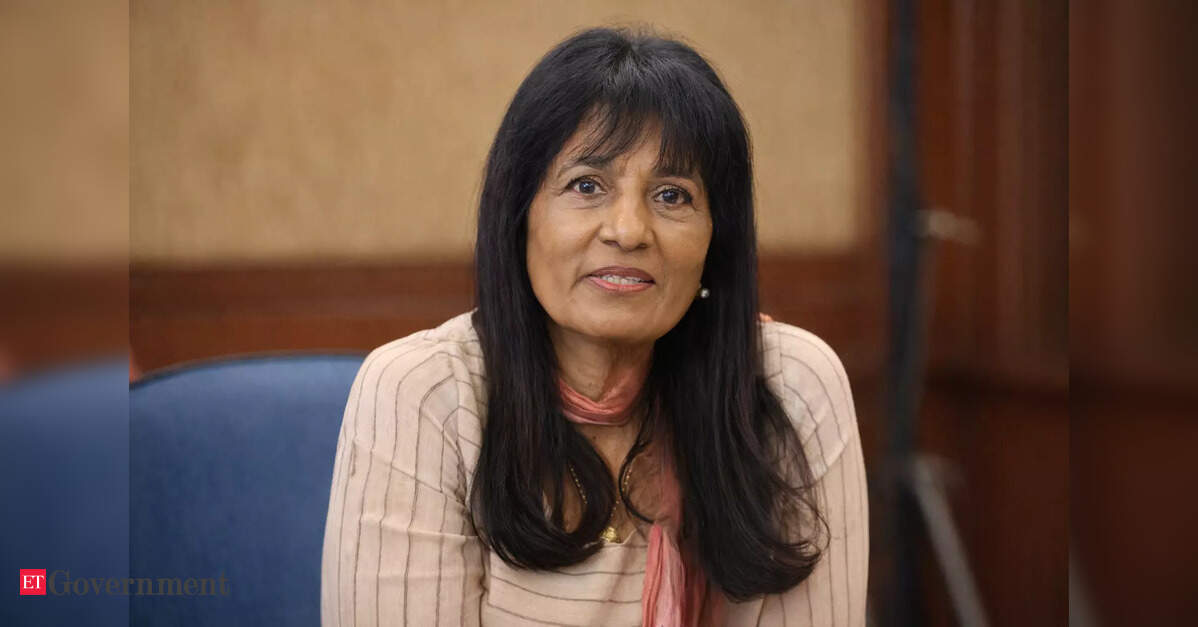
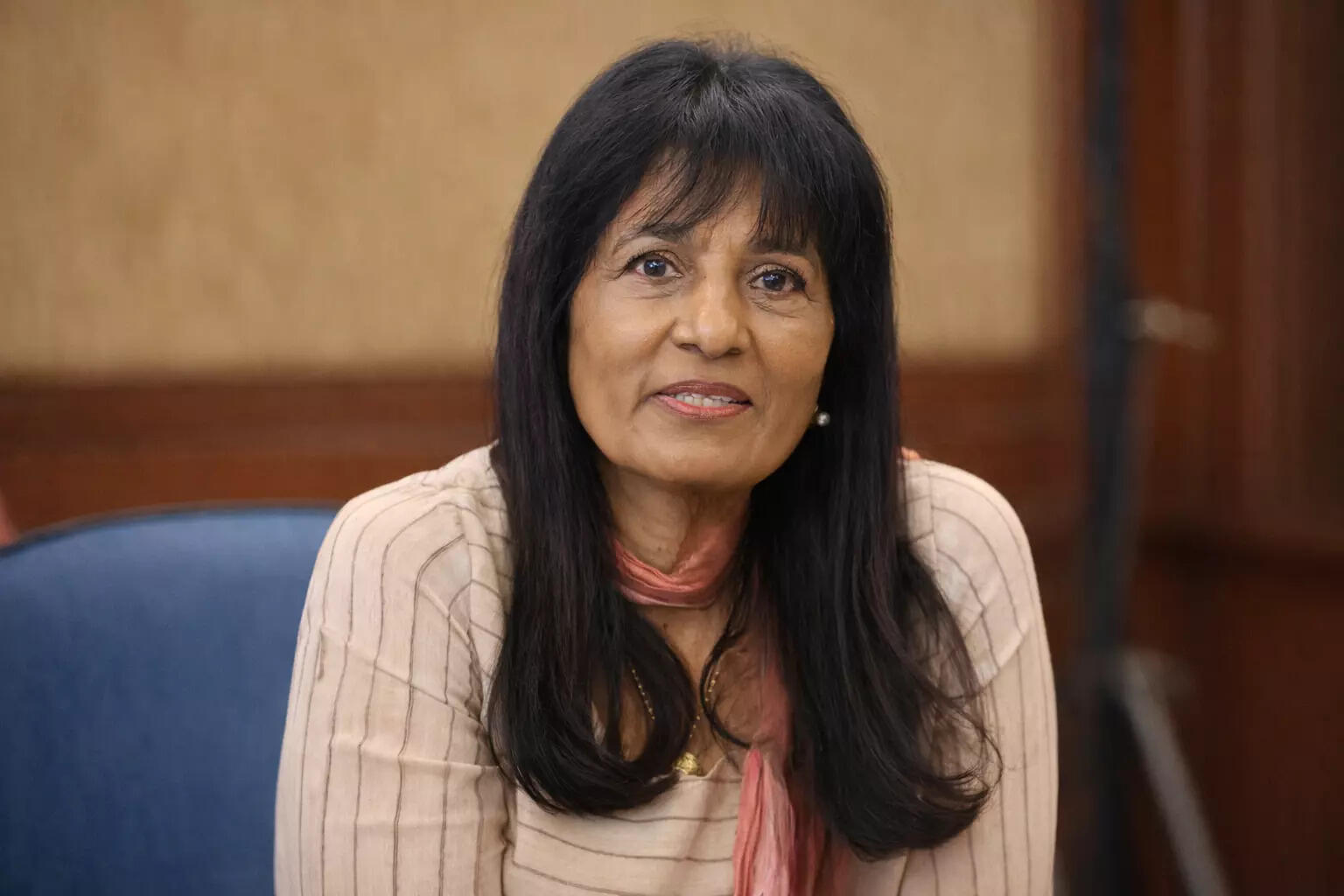
Lakshmi Venkataraman Venkatesan is the Founding and Managing Trustee of the Bharatiya Yuva Shakti Trust (BYST), one of India’s longest-running institutions focused on mentoring first-generation entrepreneurs from underserved backgrounds.
Over the past three decades, her work has centred on building structured ecosystems for micro-entrepreneurship, particularly in rural and semi-urban India, with a sustained emphasis on mentoring, access to finance, and enterprise sustainability. She is also the daughter of Shri Ramaswamy Venkataraman, Former President of India, whose public life was closely associated with constitutional values and institutional integrity.
In this interview with Anoop Verma, Lakshmi Venkatesan reflects on the role of Grampreneurs and micro-enterprises in India’s economic strategy, especially in the context of the Union Budget. She outlines specific policy interventions needed to improve access to credit, simplify compliance, expand market access, and strengthen digital capabilities at the grassroots.
Drawing from long institutional experience rather than abstract theory, her views offer a grounded assessment of how budgetary policy can translate into employment generation, enterprise resilience, and inclusive growth.
Edited excerpts:
With the Union Budget scheduled for February 1, what key measures would you like to see the Government of India announce specifically for Grampreneurs and micro-enterprises?
With the Union Budget approaching, I would like to see Grampreneurs and micro-enterprises placed squarely at the heart of India’s growth strategy. These enterprises, particularly in rural and semi-urban India, are not marginal actors; they are among the most powerful engines of employment creation, local value addition, and social mobility. If India is serious about job-led growth, the Budget must treat micro-entrepreneurship not as a welfare concern but as a strategic economic priority.
The focus, in my view, should be threefold. First, the Budget must enable the creation of many more entrepreneurs and Grampreneurs, because employment growth in India will largely come from millions of small enterprises rather than a few large firms. Second, it must help integrate these enterprises into the mainstream economy—into domestic and global supply chains—so that they can scale sustainably rather than remain trapped at subsistence levels. Third, the government must ensure that this integration happens without overwhelming them with procedural rigidity.
Digital empowerment is central to this transition. Micro-enterprises need to be supported in adopting digital tools, ESG practices, and basic compliance frameworks, but the emphasis must be on enablement rather than enforcement. Compliance should be friendly, phased, and supportive, allowing small businesses to operate within India’s industrial and trade ecosystem without fear or friction.
Equally important is easing the tax and regulatory burden. Faster GST refunds, rationalisation of input tax credit mechanisms, and simplified compliance processes would go a long way in encouraging micro-units to operate formally instead of being pushed into informality by procedural complexity. Alongside this, stronger support for skilling, digital adoption, and market access is essential. Institutions such as the Green Finance Institution can be genuine game-changers by supporting securitisation and reducing the cost of capital for small enterprises. Ultimately, what I hope to see is a Budget that converts good intent into practical, on-the-ground support.
Access to finance remains a critical challenge for grassroots entrepreneurs. What specific budgetary provisions could meaningfully enhance credit availability for micro-enterprises?
For decades, MSME policy has largely been structured around investment size or turnover thresholds. While well-intentioned, this approach often creates a perverse incentive for enterprises to remain small and discourages growth. We have consistently recommended a shift towards an age-based support framework for enterprises. Under such a model, a new enterprise would receive full support in its first year, partial support in the second, and minimal support by the third year. By the fourth year, if the ecosystem is functioning properly, the enterprise should have achieved sustainability, freeing up resources to support the next cohort of entrepreneurs.
Within this framework, there are several concrete interventions that the Budget can introduce. A significant proportion—around 35 to 40%—of CGTMSE funds should be earmarked specifically for women and SC/ST entrepreneurs. This would not only encourage banks to lend to marginalised groups but also help correct longstanding credit biases.
Equally important is simplifying the CGTMSE claim settlement process for banks. Lending to vulnerable groups will only scale if banks are confident that prudent credit decisions will be protected and that officers will not face disciplinary action in the event of defaults. Strengthening cash-flow-based lending is also critical. Better integration of platforms such as TReDS, GST systems, and Account Aggregators—combined with strong NBFC-fintech partnerships—can unlock capital and significantly reduce dependence on informal borrowing.
Beyond credit, what structural or institutional reforms would you recommend to make the ecosystem more enabling for small businesses?
Most micro-entrepreneurs are constrained not by lack of capability but by procedural overload. Structural reform must therefore prioritise ease, speed, and predictability. One important reform would be to exempt newly established micro-enterprises from GST and other major compliances in their first year, provide partial exemptions in the second year, and move towards minimal exemptions in the third year. Such a phased approach would allow enterprises to stabilise before being fully absorbed into the compliance framework.
Digital credit assessment models should be uniformly applied across MSMEs covered under CGTMSE, purely on merit, to reduce delays and arbitrary rejections. In addition, India needs a genuine single-window system for licenses and filings, and the three-year tax holiday currently available to startups should be extended to sole proprietorships and partnerships. This would significantly encourage formalisation, especially in smaller towns and rural areas.
Investment in last-mile digital infrastructure, common service centres, and shared facilities such as rural business incubation hubs can reduce operating costs and improve competitiveness without adding regulatory burden. Allowing input tax credit on employee health insurance for MSMEs would also strengthen workforce security while easing cost pressures on small firms.
Do you see an opportunity for the Budget to address market access challenges for rural producers?
Market access is the next major frontier for Grampreneurs, and the Budget can play a catalytic role here. Support should be extended for onboarding micro-enterprises onto platforms such as ONDC, along with subsidies for e-commerce adoption, logistics integration, and digital marketing. Removing transaction fees on digital payments up to ₹20,000 would further encourage digital adoption at the grassroots.
Export facilitation is another area with immense potential. Schemes such as the Export Promotion Mission and the Market Access Support scheme should be explicitly extended to micro-enterprises. At the same time, cluster-based aggregation models for handicrafts, textiles, and services must be strengthened. These measures can transform local producers into participants in national and global value chains rather than leaving them confined to local markets.
How do you assess the potential contribution of Grampreneurs to national employment and GDP growth?
Grampreneurs and micro-entrepreneurs constitute over 98 percent of India’s MSMEs, making them a high-impact, low-cost growth engine for the economy. To illustrate, our own mentored micro-entrepreneurs have generated more than twenty lakh direct and indirect employment opportunities over the past three decades. If such models are scaled nationally—through access to credit, skilling, and markets—the employment potential is enormous.
If even 25% of MSMEs gain formal credit access by 2028, Grampreneurs could play a decisive role in achieving the objectives of Viksit Bharat@2047. Today, the MSME sector employs over 25 crore people, contributes about 30 percent to GDP, and accounts for nearly 45 percent of India’s exports. Tracking the health of micro-enterprises through banking data—such as loan regularity, restructuring, and expansion—along with formal indicators like PF and ESIC contributions, can provide a clear picture of this impact.
What role can public-private partnerships play in scaling mentorship and training at the grassroots level?
Public-private partnerships are indispensable for scaling mentorship and training. Organisations like ours bring decades of experience, while government agencies and industry bring scale and resources. A good example is our partnership with the Dalit Indian Chamber of Commerce and Industry, through which we mentor and train thousands of Dalit youth, helping them become formal entrepreneurs with access to credit and skills.
Budget policy can actively incentivise such collaborations through matching grants, tax incentives, and outcome-linked funding. Support should be tied to measurable results such as the number of entrepreneurs trained, enterprises created, or jobs generated. Incentives for corporates supporting grassroots incubation, outcome-linked grants for mentoring first-generation entrepreneurs, and integration of Skill Council certifications with MSME hiring incentives can all strengthen the ecosystem. PPP models can also be used to develop supply-chain infrastructure for rural production and marketing, which is especially important given MSME-linked products account for over 45% of India’s exports.
What digital initiatives should the Budget prioritise for Grampreneurs?
Digital capability is no longer optional; it is foundational. The Budget should therefore support subsidised training in digital payments, e-commerce operations, cybersecurity, and digital bookkeeping, delivered in vernacular and tailored to real business needs. Grants for basic digital infrastructure and software adoption are equally important, as is awareness around data protection and cyber risks.
Integrating digital skilling initiatives with Self-Help Groups and rural enterprise programmes can rapidly expand reach. At the same time, stronger legal enforcement against cheque bouncing and delayed payments after delivery of goods is essential to build trust and liquidity for sellers. Improved and affordable internet penetration in deep rural India must underpin all these efforts.
Should there be a dedicated fund for women-led Grampreneur ventures?
A dedicated fund for women-led Grampreneurs would be transformative. Building on the success of initiatives such as Lakhpati Didi—where over 1.48 crore SHG women have crossed ₹1 lakh in annual income—such a fund should offer collateral-free loans, enhanced credit guarantees, interest subvention, and flexible repayment terms. Integrated mentorship and market-linkage support must be core features.
Priority should be given to first-generation women entrepreneurs from SC/ST and underserved communities, with tailored support for e-marketplace access. Expanding the Lakhpati Didi target from three crore to five crore women by 2027 would significantly accelerate inclusive growth. Skill and business-operations training camps should be organised within a 15–20 km radius, with implementing agencies held accountable for outcomes under the supervision of experienced volunteer retirees.
How should the Government measure the success of its budgetary interventions for micro-enterprises?
Success must be measured by outcomes, not allocations. Employment generation should be a central metric, building on the example of programmes like PMEGP, which have created over 31 lakh jobs. Enterprise survival rates at three and five years, along with turnover and productivity growth, should be tracked in line with global frameworks such as those recommended by the OECD.
Formalisation indicators—such as Udyam registrations, digital compliance, and repeat borrowing behaviour—are equally important, especially given the scale of credit guarantees already issued. A data-driven, outcome-linked evaluation system, complemented by an Ease of Business Indicator specifically designed for micro-enterprises, would provide a comprehensive assessment.
Equally important are ecosystem expectations, including a National Entrepreneurship Protection Policy, simplified procurement and pilot support for new products, a dedicated national seed fund for first-generation entrepreneurs, rationalised GST on agricultural machinery, priority access to government tenders, graceful exit mechanisms for failed startups, practical entrepreneurship education, and faster implementation of labour reforms.
Finally, could you summarise the scale and impact of BYST’s work with Grampreneurs and micro-enterprises?
For over three decades, Bharatiya Yuva Shakti Trust has helped young people from underserved backgrounds transition from job seekers to job creators. Through structured mentoring and enterprise support, BYST-mentored entrepreneurs have generated more than twenty-five lakh employment opportunities across India. We provide end-to-end support—from awareness and counselling to training, long-term mentoring, and assistance in accessing bank finance—particularly for first-generation entrepreneurs.
To date, BYST has supported over 51,000 entrepreneurs, with women accounting for 35 percent and SC/ST entrepreneurs for 20%. Our Grampreneur movement continues to expand across multiple states, supported by a mentor network of over 22,000 professionals. At its core, BYST’s work demonstrates that India’s entrepreneurial future will be shaped not only in boardrooms, but in villages and small towns where enterprise, dignity, and local prosperity converge.
How do you define a Grampreneur in the Indian context?
A Grampreneur is a micro-entrepreneur whose value chain is rooted in villages and small towns—someone who builds locally embedded businesses that create jobs and value within their own communities. Unlike urban startup models focused on rapid scale and valuation, Grampreneurs strengthen village-level economies through employment generation, digital adoption, and integration into local value chains, often despite limited access to capital or networks.
By articulating this concept, we sought to elevate rural entrepreneurs from informal operators to legitimate economic actors deserving recognition, mentorship, and structured support. Ultimately, the idea of the Grampreneur reminds us that India’s entrepreneurial future will be shaped as much in rural and semi-urban India as in metropolitan innovation hubs.