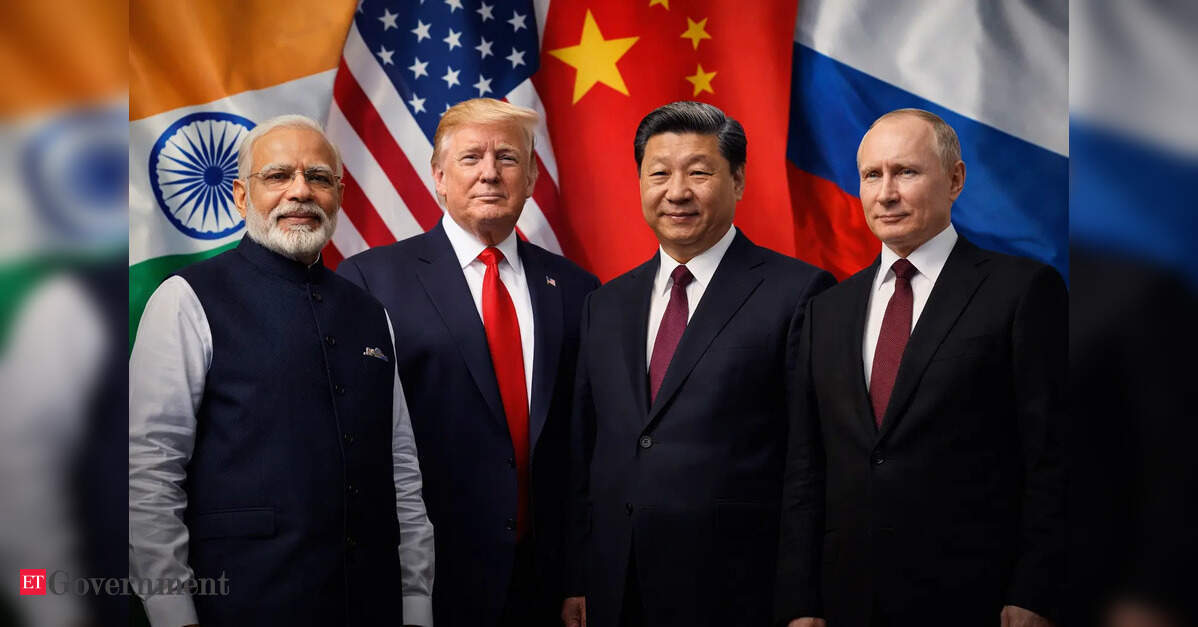
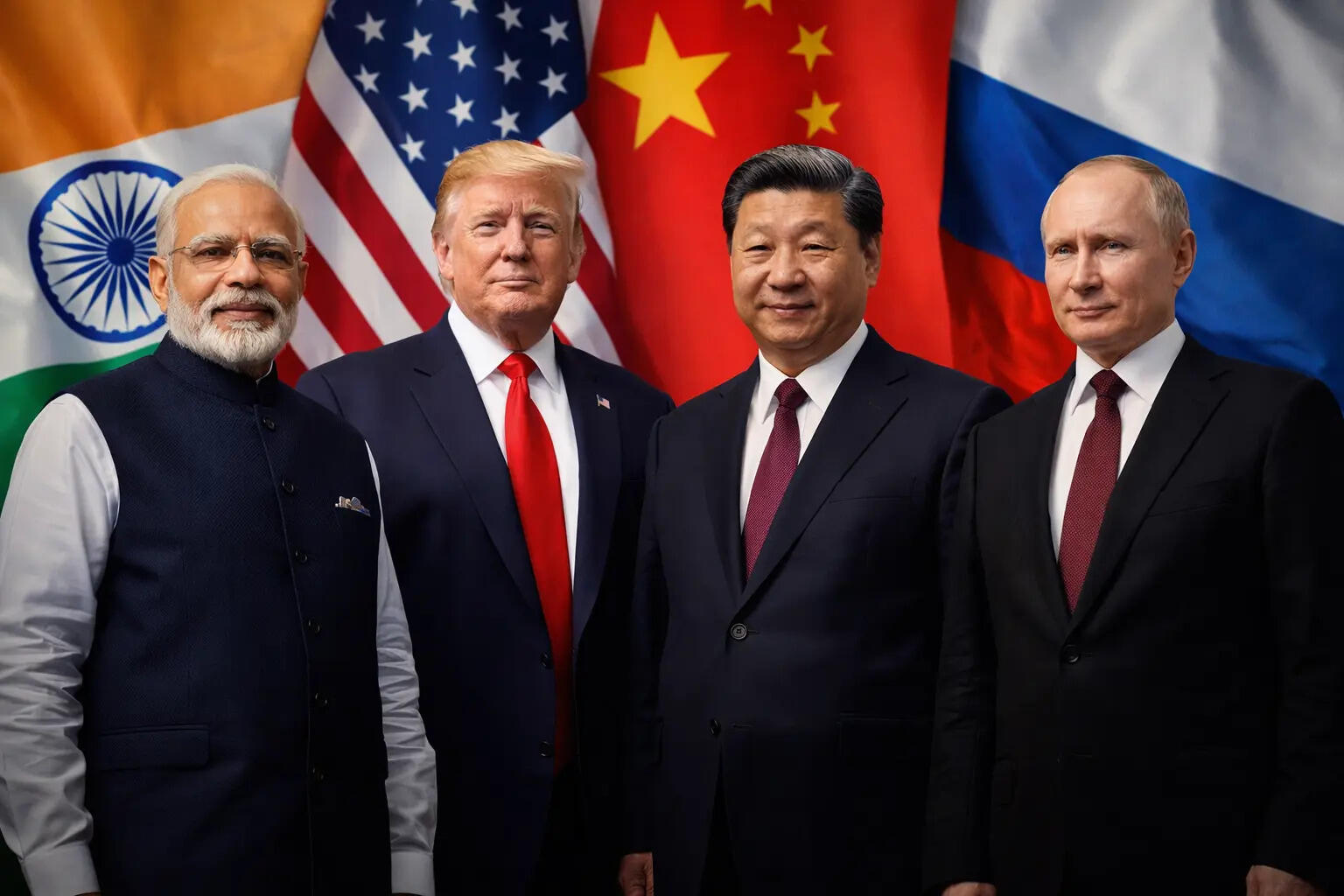
The early decades of the twenty-first century have been marked by a structural transformation in the architecture of the global economy—one that was perceptively anticipated in the World Bank’s Global Development Horizons 2011: Multipolarity: The New Global Economy.
That report, written in the aftermath of the global financial crisis, posited a gradual but decisive transition away from a unipolar system dominated by advanced Western economies toward a more distributed configuration of economic power. Fifteen years on, the contours of that transition have not only materialised but have been reshaped by geopolitical tensions, technological disruptions, and a resurgence of economic nationalism.
Multipolarity today is not merely an economic phenomenon; it is a complex, contested, and often fragmented order defined by competing visions of globalisation itself.
At the core of the original report was the emergence of multiple “growth poles,” driven by large developing economies such as China, India, Brazil, and others. These economies were no longer peripheral participants in global trade but central engines of growth, innovation, and capital formation.
The report envisaged a world in which economic dynamism would be increasingly decoupled from traditional industrial centres in North America and Europe, leading to a diffusion of production networks and financial flows. This structural shift, it argued, would generate both opportunities for global prosperity and challenges for governance.
In retrospect, the prediction of multipolar growth has been borne out, albeit with significant qualifications. China’s meteoric rise as the world’s second-largest economy has redefined global supply chains and trade patterns. India, while following a different developmental trajectory, has emerged as a major digital and services powerhouse, leveraging its demographic advantage and technological capabilities.
Southeast Asia, Africa, and parts of Latin America have also contributed to the diversification of growth, though unevenly. Yet, the anticipated convergence between advanced and emerging economies has proven more complex than initially imagined. Structural inequalities, institutional constraints, and external shocks—most notably the COVID-19 pandemic—have tempered the pace of convergence.
More significantly, the geopolitical context within which multipolarity unfolds has undergone a profound transformation. The optimism of the early 2010s, characterised by an expanding globalisation and cooperative multilateralism, has given way to an era of strategic competition and fragmentation. The intensification of US–China rivalry has introduced a new axis of geopolitical tension, with implications for trade, technology, and finance.
The reconfiguration of global supply chains—often described as “friend-shoring” or “near-shoring”—reflects a growing emphasis on resilience and security over efficiency. In this context, multipolarity is not simply a diffusion of economic power but a re-politicisation of economic relations.
The corporate landscape, another central theme of the 2011 report, has also evolved in ways that both align with and diverge from earlier expectations. The rise of emerging-market multinationals was identified as a key driver of multipolarity, challenging the dominance of established Western firms. Today, this trend is unmistakable.
Chinese technology giants, Indian digital platforms, and multinational conglomerates from emerging economies have expanded their global footprint, reshaping competitive dynamics across sectors. These firms are not merely replicating existing business models but innovating in areas such as digital payments, e-commerce, and renewable energy.
However, the global expansion of these corporations is increasingly mediated by geopolitical considerations. Regulatory scrutiny, data localisation requirements, and national security concerns have created a more complex operating environment. The fragmentation of the digital economy—often described as the emergence of “digital spheres of influence”—illustrates the interplay between technological advancement and geopolitical rivalry. In this sense, the corporate dimension of multipolarity is inseparable from the broader dynamics of state power and strategic competition.
The financial dimension of multipolarity, perhaps the most intricate aspect of the transition, has likewise evolved in unexpected ways. The 2011 report anticipated a gradual move toward a multicurrency system, reducing the dominance of the US dollar and enhancing the role of emerging-market currencies. While there has been some progress in this direction, the dollar remains the preeminent global reserve currency. Its dominance has been reinforced by the depth and liquidity of US financial markets, as well as by the absence of credible alternatives.
Yet, recent developments suggest a more nuanced trajectory. The increasing use of local currencies in bilateral trade agreements, particularly among emerging economies, reflects a desire to reduce dependence on the dollar.
The expansion of financial arrangements such as currency swap lines and regional development banks underscores the search for alternative mechanisms of liquidity and stability. Moreover, the advent of digital currencies, including central bank digital currencies (CBDCs), introduces new possibilities for the reconfiguration of the international monetary system.
At the same time, the weaponisation of finance—through sanctions and restrictions on access to global payment systems—has heightened awareness of the vulnerabilities associated with dollar dependence. This has accelerated efforts by some countries to diversify their financial relationships and develop parallel systems. The result is a more fragmented financial landscape, in which multiple layers of integration and decoupling coexist.
The interplay between economic multipolarity and geopolitical fragmentation is particularly evident in the domain of trade. The multilateral trading system, once anchored by the World Trade Organization, has faced significant challenges in adapting to new realities.
The proliferation of regional and bilateral trade agreements reflects both the dynamism and the fragmentation of global trade governance. Initiatives such as the Regional Comprehensive Economic Partnership (RCEP) and the Comprehensive and Progressive Agreement for Trans-Pacific Partnership (CPTPP) illustrate the emergence of alternative frameworks for economic integration.
India’s own approach to trade exemplifies the complexities of navigating a multipolar world. While maintaining a cautious stance toward multilateral agreements, India has actively pursued bilateral trade partnerships and sought to strengthen its domestic industrial base. This strategy reflects a broader shift toward “strategic autonomy,” in which economic policy is closely aligned with geopolitical considerations.
The emphasis on self-reliance, or Atmanirbhar Bharat, underscores the tension between integration and sovereignty that characterises contemporary economic policymaking.
Technological transformation, largely absent from the 2011 analysis in its current intensity, has emerged as a defining feature of the multipolar order. The rapid advancement of artificial intelligence, digital infrastructure, and data-driven economies has created new arenas of competition and cooperation. Technology is no longer a neutral enabler of economic activity but a strategic asset with profound implications for national security and global influence.
The contestation over technological standards, supply chains, and intellectual property rights has introduced a new dimension to multipolarity. The semiconductor industry, for instance, has become a focal point of geopolitical rivalry, with efforts to secure supply chains and develop domestic capabilities. Similarly, the governance of artificial intelligence and digital platforms has become a subject of intense debate, reflecting divergent regulatory philosophies and strategic priorities.
Climate change and the transition to a low-carbon economy add yet another layer of complexity to the multipolar landscape. The need for coordinated global action sits uneasily with the realities of geopolitical competition and economic divergence.
While emerging economies play a crucial role in shaping the trajectory of global emissions, their developmental priorities often differ from those of advanced economies. The financing of climate mitigation and adaptation, therefore, becomes a central challenge, requiring innovative mechanisms and renewed multilateral cooperation.
In this context, the concept of multipolarity must be understood not as a stable equilibrium but as a dynamic and contested process. The diffusion of economic power does not automatically translate into a more balanced or harmonious global order. On the contrary, it introduces new forms of competition, uncertainty, and fragmentation. The coexistence of multiple centres of power, each with its own priorities and capabilities, complicates the task of global governance.
The role of institutions in managing this complexity is both critical and contested. Traditional multilateral institutions, designed in an era of Western dominance, face challenges of legitimacy and effectiveness. At the same time, new institutions and frameworks are emerging, reflecting the aspirations and interests of a more diverse set of actors. The interplay between these institutional layers—global, regional, and bilateral—defines the evolving architecture of governance in a multipolar world.
India’s position within this landscape is particularly significant. As one of the largest emerging economies, with a growing technological and strategic footprint, India embodies many of the characteristics associated with multipolarity.
Its engagement with multiple geopolitical blocs, its emphasis on digital public infrastructure, and its efforts to balance growth with inclusion position it as a key actor in shaping the future of the global economy. At the same time, India faces its own set of challenges, including infrastructure deficits, regulatory complexity, and the need for sustained institutional reform.
Looking ahead, the trajectory of multipolarity will be shaped by a series of interrelated factors. The evolution of great power relations, particularly between the United States and China, will remain a central determinant.
The capacity of emerging economies to sustain growth and manage internal challenges will influence the distribution of economic power. Technological innovation will continue to redefine the boundaries of competition and cooperation. And the ability of the international community to address global challenges—ranging from climate change to public health—will test the resilience of the multipolar order.
In synthesising the insights of the 2011 report with contemporary developments, it becomes evident that multipolarity is both an enduring reality and an evolving phenomenon. The fundamental shift toward a more distributed global economy has taken root, but its implications are being continually reshaped by forces that were either nascent or unforeseen a decade and a half ago.
The challenge for policymakers, scholars, and practitioners is to navigate this complexity with a nuanced understanding of both the opportunities and the risks inherent in a multipolar world.
Ultimately, the question is not whether multipolarity will define the future of the global economy—it already does—but how it will be managed. Will it lead to a more inclusive and resilient system, capable of accommodating diversity and fostering cooperation? Or will it exacerbate fragmentation and conflict, undermining the very foundations of global stability? The answer will depend on the choices made by states, institutions, and societies in the years to come.