 “>
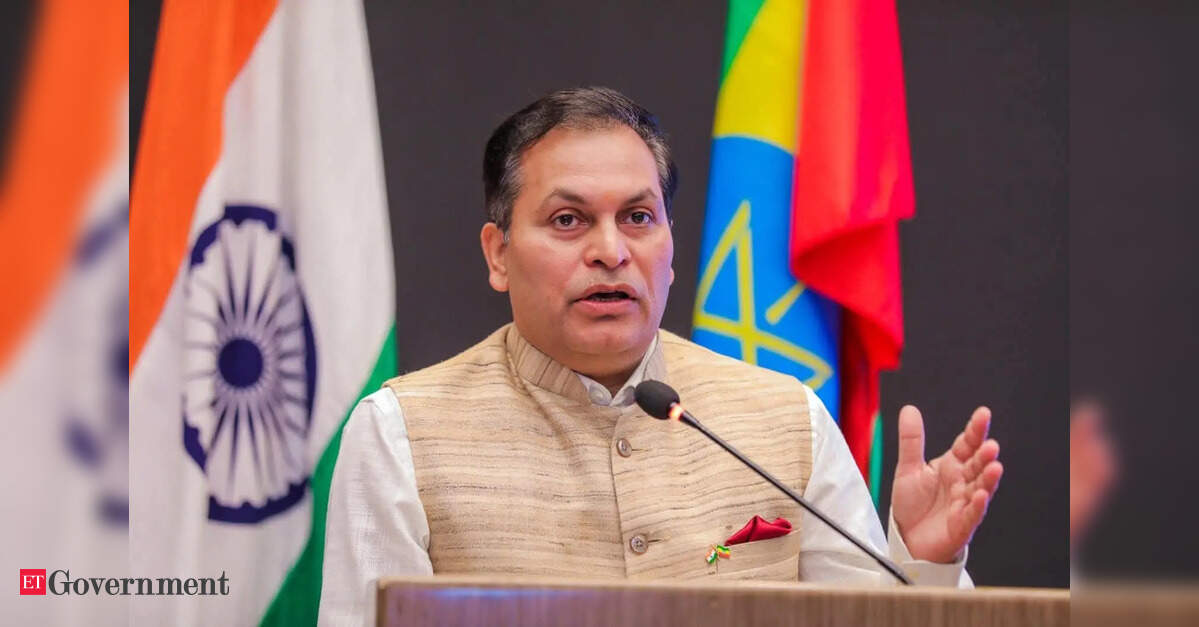
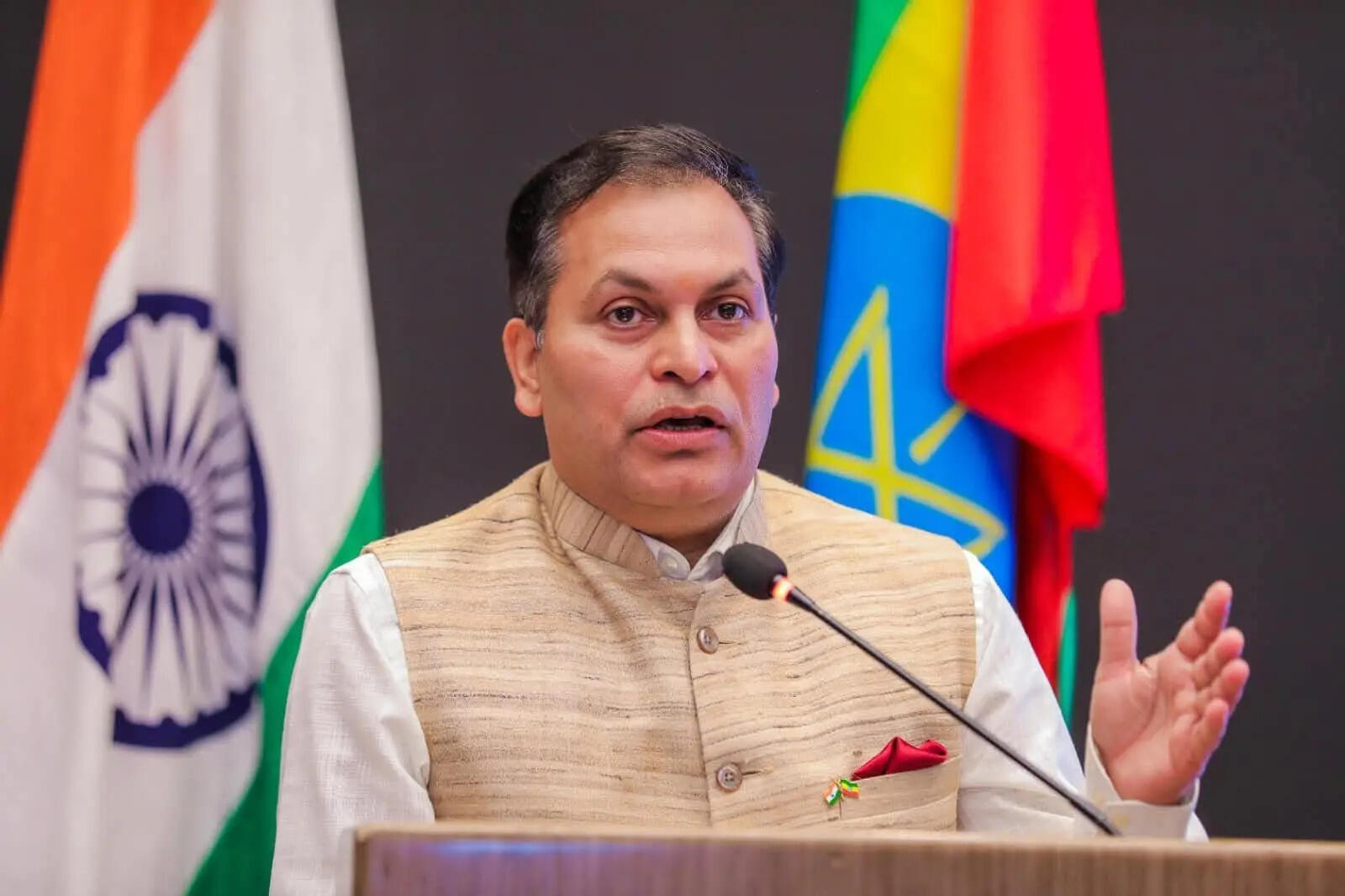
“>As Africa emerges as one of the most consequential theatres of economic growth, demographic transformation and geopolitical competition in the 21st century, India is steadily deepening its engagement with the continent through a partnership model centred on development cooperation, digital innovation and South-South solidarity. In this evolving landscape, Anil Kumar Rai, Ambassador of India to the Federal Democratic Republic of Ethiopia and the Permanent Representative to the African Union, occupies a strategically important diplomatic position.
Speaking to Anoop Verma, Ambassador Rai discusses the transformation of India-Ethiopia relations into a strategic partnership, the growing relevance of Digital Public Infrastructure in Africa, emerging opportunities for Indian industry across sectors such as infrastructure, fintech, energy and agriculture, and the role of the African Union in shaping a multipolar global order.
He also explains why Africa should no longer be viewed merely as a resource base, but as a long-term strategic and economic partner for India and the wider Global South.
Edited excerpts:
India and Africa are now entering a phase of deeper strategic engagement. How do you assess the current trajectory of India-Ethiopia relations, particularly in areas such as trade, digital infrastructure, capacity building and development cooperation?
India’s partnership with Africa, including with Ethiopia and the African Union, has become one of the most important dimensions of our foreign policy engagement. Ethiopia, in particular, shares one of the oldest and most comprehensive relationships with India on the continent.
During Prime Minister Narendra Modi’s visit to Ethiopia in December 2025, our bilateral relationship was elevated to the level of a strategic partnership. This is significant because it means that both countries are now engaging in regular consultations on bilateral, regional and international issues of mutual interest.
One of the important dimensions added to this partnership is cooperation in technology and the adoption of scalable digital solutions that India has successfully implemented at a population scale. Emerging technologies such as artificial intelligence, digital systems and agricultural technologies are becoming important pillars of cooperation. Capacity building, training and development cooperation also remain central to our engagement.
Ethiopia is among Africa’s fastest-transforming economies despite facing regional and internal challenges. What opportunities do you see for Indian companies in sectors such as infrastructure, pharmaceuticals, agriculture, renewable energy and fintech?
According to IMF forecasts, Ethiopia is expected to register one of the highest growth rates not only in Africa but globally. This growth has been driven by far-reaching economic reforms initiated under the country’s leadership.
Several sectors have now been opened up for foreign participation, including real estate, mining, agriculture and financial services. Ethiopia is also implementing IMF-supported economic restructuring measures and has undertaken reforms in its currency management systems. These developments are creating substantial opportunities for international investors, including Indian companies.
Infrastructure is one of the most promising sectors. Ethiopia is developing a major new international airport project with an estimated cost of around USD 12.5 billion. Indian infrastructure major Larsen & Toubro has already qualified for one of the project packages. Beyond that, there are significant opportunities for subcontracting, engineering consultancy and specialised services. Ethiopia has also discovered natural gas resources and is exploring fertiliser production opportunities. This opens doors for Indian expertise in engineering, project consultancy and industrial services.
Another important advantage is Ethiopia’s youthful population. The median age in the country is very low, making it one of the youngest societies in the world. Urban transformation is also taking place rapidly, with major investments in mobility systems, infrastructure and smart urban development. Ethiopia is also preparing to host major international events, including COP-related engagements in the coming years.
For Indian businesses, sectors such as artificial intelligence, banking and finance, agriculture, infrastructure, renewable energy and real estate offer strong long-term opportunities.
Under Prime Minister Narendra Modi’s leadership, India has increased its engagement with the Global South and positioned itself as a development partner rather than merely a trading power. How is this philosophy reflected in India’s engagement with the African Union and African institutions?
India’s contemporary approach toward Africa was clearly articulated by Prime Minister Narendra Modi during his address to the Parliament of Uganda in 2018. Those principles, often referred to as the Kampala Principles, placed Africa at the centre of India’s foreign policy priorities. In the last several years, India has opened 17 new diplomatic missions across Africa, demonstrating the seriousness of this engagement.
What makes India’s partnership unique is that it is aligned with African priorities. Africa has its own long-term development blueprint known as Agenda 2063, often described as “The Africa We Want.” This vision is being implemented through phased ten-year plans. India’s cooperation is designed to support Africa in achieving these priorities.
Our collaboration spans multiple sectors including digital public infrastructure, healthcare, pharmaceuticals, ease of living technologies, capacity building, peace and security, and the peaceful utilisation of marine resources. The focus is on sustainable development and institution building rather than transactional engagement.
India’s Digital Public Infrastructure model has emerged as a globally recognised governance innovation. Is there growing interest among African countries in adopting platforms such as Aadhaar, UPI, DigiLocker and telemedicine systems?
There is significant interest across Africa in India’s Digital Public Infrastructure architecture. African countries increasingly view technology as an important enabler for overcoming traditional developmental constraints. What attracts them to India’s DPI model is that it is open, scalable and allows countries to retain control over their own data and digital architecture.
One of the most important applications in Africa is digital identity creation. Large sections of populations in many countries remain outside formal banking systems. Digital identity platforms can help integrate these populations into the financial ecosystem and significantly expand formal economic participation.
Similarly, digital payment systems can help improve tax collection efficiency and formalise large informal sectors. Africa currently has one of the lowest tax-to-GDP ratios globally. Technologies such as QR-code-based transactions and interoperable payment systems can increase transparency, traceability and efficiency.
India has been sharing its DPI experiences both bilaterally and through continent-wide digital cooperation platforms across Africa.
Geopolitical competition in Africa is intensifying, with major powers increasing their economic and strategic footprint across the continent. How does India differentiate its engagement model from other global actors?
Africa today understands the value of its own market and strategic importance. The African Continental Free Trade Area is steadily progressing toward creating an integrated market of around 1.4 billion people with a combined GDP of nearly USD 3.8 trillion. India was among the first countries to provide duty-free market access to many African nations in 2012. Since then, several other countries have also expanded preferential access arrangements.
India’s approach is distinct because we seek to integrate Africa into broader value chains rather than merely treating the continent as a supplier of raw materials or a market for finished goods. The objective is to support manufacturing capabilities, intermediate product development and industrial ecosystems within Africa itself. This model aims to create sustainable and mutually beneficial economic partnerships that generate long-term value for both sides.
Connectivity between India and Africa is often discussed as an area requiring improvement. What steps are being taken to strengthen trade routes, logistics partnerships, aviation links and people-to-people exchanges?
Connectivity between India and Africa is already improving significantly. From Addis Ababa alone, there are extensive flight connections to major Indian cities including Delhi, Mumbai, Bengaluru, Hyderabad and Chennai. With Ethiopia developing a major new airport and strengthening intra-African aviation connectivity, travel across the continent is expected to become faster and more seamless over the next five to seven years.
Maritime logistics are also gradually improving. Indian and international shipping operators are strengthening routes connecting India with ports across eastern and southern Africa, including Djibouti and South Africa. As trade volumes increase further, connectivity infrastructure will naturally expand in response to growing demand.
As India deepens its engagement with the Global South, what role do Ethiopia and the African Union play in shaping a more multipolar and inclusive global order?
India and African countries share many common objectives regarding the future international order. Both support a rules-based global system where the interests of all countries are respected and where multilateral institutions become more representative and inclusive. This convergence has been visible in initiatives such as the Voice of Global South Summit, where African participation has been very strong. Ethiopia has participated actively in all editions of the summit convened by India.
India has consistently advocated greater representation for developing countries in global governance institutions. One of the most important examples was India’s decision during its G20 Presidency in 2023 to facilitate the inclusion of the African Union as a permanent member of the G20. That decision gave Africa a stronger institutional voice in global economic governance.
China has made major economic and infrastructure inroads into Africa over the last two decades. What can India do to strengthen its own presence on the continent?
India’s relationship with African countries must be viewed on its own merits and strengths. India enjoys several natural advantages, including geographical proximity, strong diaspora linkages, historical goodwill and similarities in developmental priorities. Indian diaspora-led investments have also contributed significantly in several African economies.
Over the last six to seven years, India has expanded its diplomatic footprint considerably and engagement at the highest political levels has increased substantially. Africa’s demand for affordable products, intermediate goods, technology and development partnerships aligns naturally with India’s own capabilities. This creates opportunities for cooperation across sectors ranging from agriculture to advanced technologies.
India should continue developing a partnership model that is mutually beneficial, sustainable and aligned with Africa’s long-term aspirations.
What message would you like to give to Indian businesses and policymakers about the long-term strategic importance of Africa in the emerging global economic order?
Africa should be viewed as a long-term opportunity. This is the continent that will continue to witness population growth over the next several decades, creating enormous demand across sectors. The older model of merely extracting resources from Africa is no longer viable. Any country or business looking toward Africa must engage with the continent as a long-term development partner and approach it with seriousness, commitment and respect for African priorities.