
Chhattisgarh is attempting one of India’s most ambitious economic transitions: from a resource-driven industrial state to a diversified investment hub powered by technology, manufacturing and innovation.
With incentive-led policies, fast-tracked approvals, startup funding support and reforms aimed at reducing compliance burdens, the state is courting investors across sectors ranging from IT and electronics to healthcare and textiles.
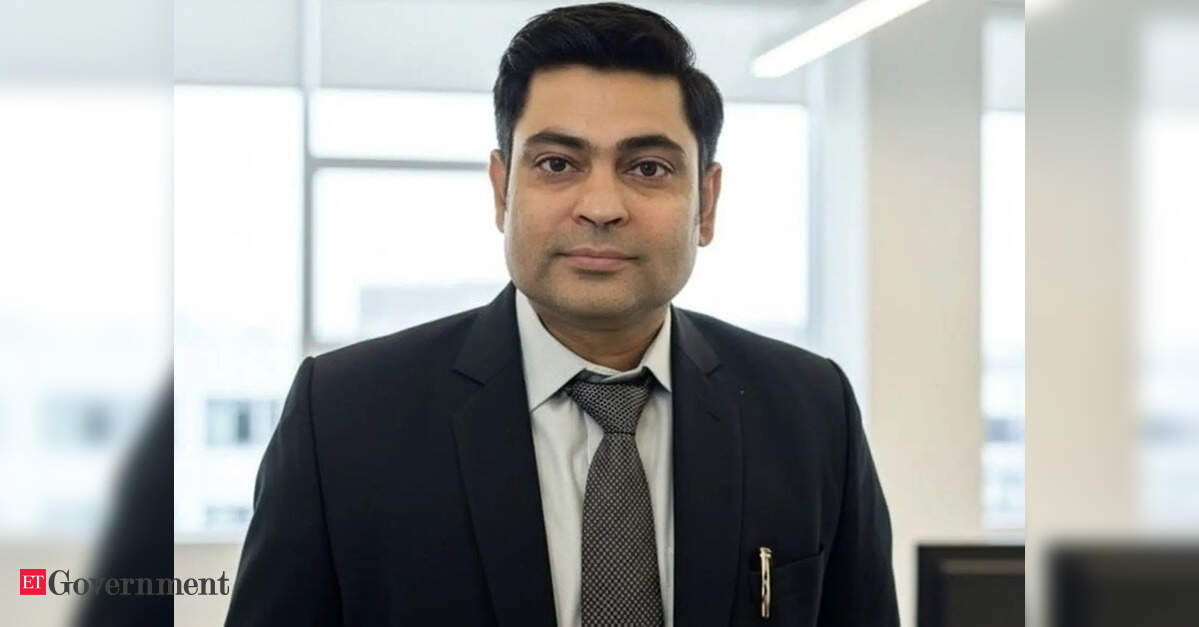
In conversation with ETGovernment’s Arpit Gupta, Vishwesh Kumar, Managing Director of Chhattisgarh State Industrial Development Corporation (CSIDC), outlines the strategy behind this transformation and explains why Chhattisgarh believes its next growth cycle will be driven as much by digital infrastructure and skilled talent as by its legacy industries.
Edited excerpts:
Chhattisgarh has historically been anchored in core sectors like mining and steel. What are the key structural changes that are enabling its transition into a multi-sector economy spanning IT, healthcare and startups?
Chhattisgarh’s transition from a resource-led economy to a diversified, future-ready growth model is being driven by a decisive shift in policy design and institutional focus. At the core is the Chhattisgarh Industrial Development Policy 2024–30, which charts a clear roadmap for new-age sectors such as AI, robotics, IT/ITeS, semiconductors, electronics, textiles, and pharmaceuticals. Each sector is backed by targeted incentive packages, with total incentives in select segments going up to 200%, ensuring both investment attraction and long-term ecosystem development. Our approach moves away from rigid, one‑size‑fits‑all incentives. For large investments with significant employment potential, the policy enables a progressive and adaptive incentive structure, allowing us to respond to investor needs in a timely and structured manner.At the same time, MSMEs are being actively integrated into this growth strategy through simplified compliance frameworks, access to capital support, and linkage opportunities with larger industrial and digital ecosystems.
Complementing this is the Innovation & Startup Promotion Policy, which offers incentives such as seed funding of up to ₹10 lakh and a ₹100 crore corpus providing 50% matching grants. These policy initiatives reflect the state’s commitment to building a competitive, multi‑sector investment ecosystem—one that balances industrial expansion, innovation, and job creation.
How is the state ensuring that its traditional strengths in metals and mining complement, rather than compete with, emerging sectors like food processing, textiles and GCCs?
Rather than viewing sectors in isolation, Chhattisgarh’s industrial strategy emphasises synergy. Its robust metals and mining ecosystem, contributing more than 13 percent to India’s mineral production value, underpins downstream and emerging sectors by ensuring access to raw materials, affordable power, and reliable logistics. The state is developing dedicated, sector-specific industrial parks for electronics, food processing, textiles, and garments, each designed to meet the unique infrastructure and operational needs of its industry. This targeted infrastructure approach ensures that sectors grow on their own strengths while benefiting from the larger industrial ecosystem.
The state’s power surplus and abundant water further support energy-intensive sectors such as data centres and textiles, enhancing their competitiveness. At the same time, the minerals-to-metals value chain is enabling downstream engineering ecosystems and skill development, critical for sectors like Global Capability Centres (GCCs). Nava Raipur is being developed as a clean, future-ready hub for IT and services. A steel plant in Bhilai and a GCC in Nava Raipur are not contradictions, they are chapters of the same growth story.
Chhattisgarh’s move to decriminalise 279 minor offences across departments is significant. How has this translated into tangible improvements for businesses in terms of compliance burden, investment timelines and investor confidence?
The impact has been both structural and psychological. Through the Chhattisgarh Jan Vishwas Act, the state decriminalised 163 provisions across eight Acts, followed by 116 more across 14 Acts in the second edition, sending a clear signal that businesses are partners in growth.
Provisions that earlier led to criminal prosecution and prolonged legal proceedings have been replaced with administrative penalties. This allows entrepreneurs to address technical non-compliances through fines and corrective action, rather than navigating lengthy judicial processes. For MSMEs, this has significantly reduced the compliance burden. In terms of investment timelines, lower regulatory risk has enabled faster internal approvals within investor organisations, reducing friction in decision-making.
Equally, this reform has strengthened investor confidence. Chhattisgarh is the first state in India to introduce a second phase of such reforms, reflecting a sustained commitment to ease of doing business. It signals governance temperament.
Fast-tracking land allocation for instance within 45 days for large projects signals a shift in governance. What institutional changes have made this speed possible, and how sustainable is this model as investment scales up?
Chhattisgarh’s ability to fast-track approvals, from land allocation to possession within defined timelines, is rooted in systemic governance reforms driven by digitisation and process integration. At the centre of this is the OneClick Single Window System, which eliminates procedural delays by integrating 132 services across 10 departments onto a single digital platform. This ensures that investors no longer have to navigate multiple offices or layers of paperwork, significantly reducing turnaround time.
In parallel, land management has been fully digitised. The system now operates on a time‑bound, three‑level approval framework, supported by continuous back‑and‑forth digital monitoring to eliminate bottlenecks. Investors can access real-time information on available land parcels and complete the application process online with transparency and ease. This has brought predictability and speed to one of the most critical aspects of project execution. Importantly, this model is designed to be scalable and sustainable. With continuous system upgrades, expanding service integration, and a strong digital backbone, Chhattisgarh is well-positioned to maintain efficiency even as investment volumes grow.
With investments from firms like RackBank and Polymatech, and a new startup policy in place, what sectors do you see driving the next phase of job creation, and how is the state preparing its workforce for these opportunities?
Sectors such as IT, textiles, and pharmaceuticals are poised to drive the next phase of job creation in Chhattisgarh, supported by targeted policy interventions and enabling infrastructure. In IT/ITeS, the state is developing a 90-acre earmarked ecosystem in Nava Raipur, complemented by incentives of up to 150%, aimed at attracting high-quality investments and generating skilled employment.
For textiles, a key employment generator, the state provides monthly employment assistance of up to ₹6,000 for women and ₹5,000 for men, in addition to training support—boosting both job creation and women’s workforce participation. Women entrepreneurs also receive an additional 10% incentive across sectors, further strengthening inclusive growth.
Our skilling approach is industry-led. We offer training subsidies of up to ₹15,000 per employee or one month’s salary, enabling businesses to design and deliver training aligned with their needs, while also extending support to private training centres in identified sectors to strengthen the talent pipeline. Additionally, reforms such as worker housing within industrial zones and 24/7 operations, including night shifts for women, are creating a more flexible, employment-friendly ecosystem.
How does the Government of Chhattisgarh plan to position Chhattisgarh as a preferred investment hub, and what key advantages will it offer investors?
Chhattisgarh is positioning itself as one of India’s most efficient and future-ready investment destinations, anchored in strong fundamentals, reform-driven governance, and strategic location. Its central geography offers seamless national access, with major cities within 120 minutes by air, supported by one of the highest railway infrastructure investments in the country. This is complemented by a power-surplus ecosystem and competitive operating costs.
What sets the state apart is its consistent first‑mover advantage in opening up new business opportunities, underpinned by an aggressive, sector‑forward policy framework and over 434 completed reforms, earning it recognition as a Top Achiever across four categories under DPIIT’s Business Reform Action Plan. These reforms are operationalised through the OneClick Single Window System, which integrates approvals across departments into a single, time‑bound digital interface, significantly reducing execution risk for investors.
The state is also unlocking district-level strengths- Bastar and Surguja, with their untapped natural beauty and immense tourism potential, are emerging as new frontiers for hospitality and eco-tourism, while Raipur, Durg, and Bilaspur continue to anchor growth in services and industry. Together, they are shaping a balanced, future-ready growth landscape.
Backed by strong institutions like IIT, IIM, AIIMS, NIFT, and NLU, along with a safe, high-quality living environment, Chhattisgarh offers a business ecosystem defined by simplicity, speed, and predictability. With streamlined processes and time-bound approvals, it is an easy place to do business. For investors, the state presents a compelling mix of scale, stability, and execution efficiency.