

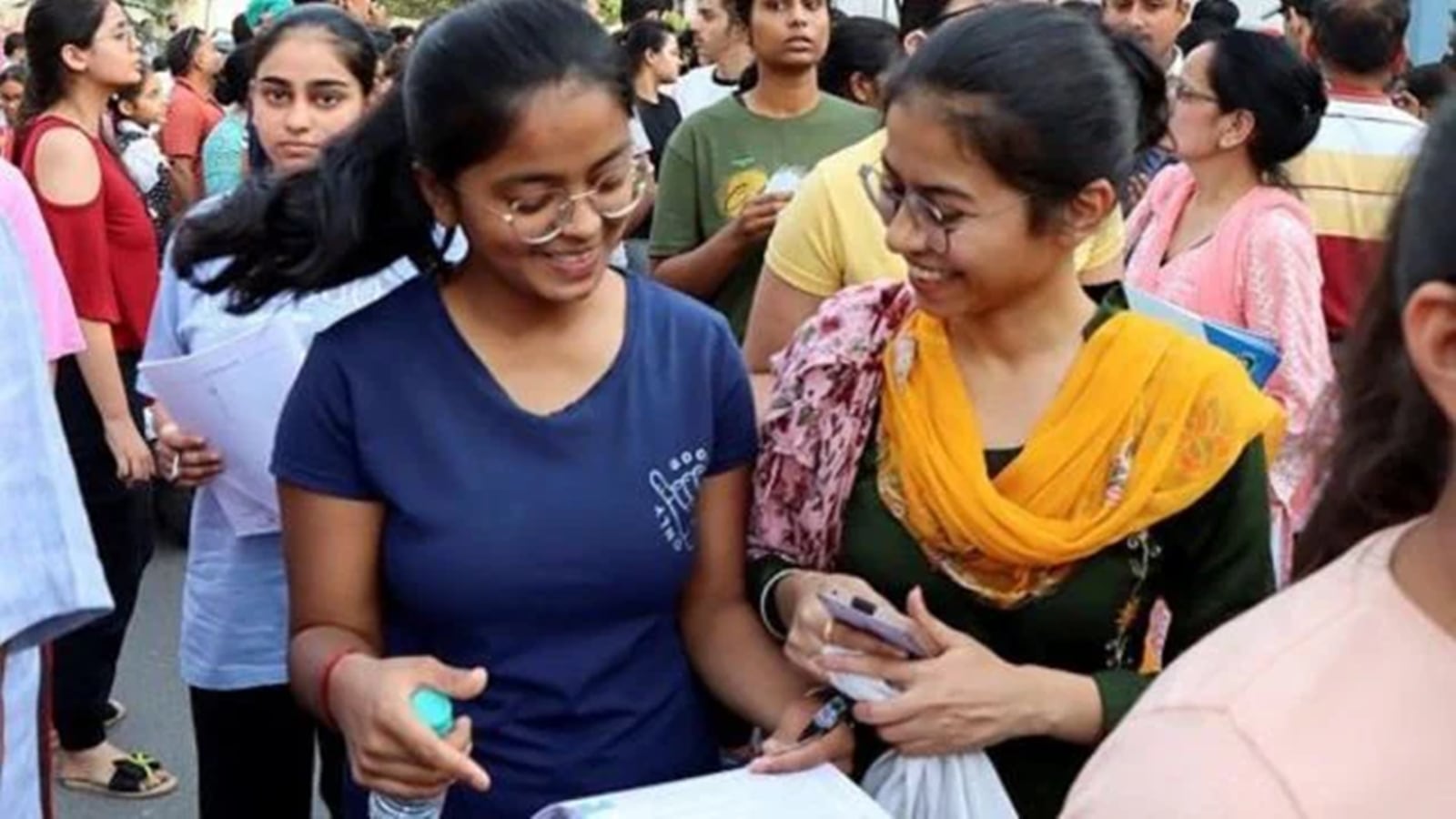
The Common Law Admission Test (CLAT) 2026 will be conducted on December 7, 2025, for admissions to undergraduate and postgraduate law programmes across 24 National Law Universities. With high candidate turnout expected, the Consortium of National Law Universities has issued a detailed set of exam-day guidelines to streamline entry, verification and conduct inside the test halls.
Candidates have been advised to strictly follow the instructions to avoid last-minute issues at the centre.

Important instructions for exam day
Reach the exam centre at least 60 minutes before the test (by 1:00 PM); gate closes at 2:15 PM.
Entry sequence: 1:00 PM (gates open), 1:30 PM (hall entry bell), 1:50 PM (question paper envelope distribution), 2:00 PM (exam start).
PwD/SAP candidates using scribes must report 90 minutes early; additional time is allowed only for pre-approved candidates.
Documents to Carry
Printed colour admit card and an original government-issued photo ID.
Two black/blue ballpoint pens, a transparent water bottle, and an extra passport-size photograph if needed.
PwD candidates must bring scribe authorisation documents, where applicable.
Prohibited Items & Dress Code
Story continues below this ad
No electronic gadgets, wallets, jewellery, books, notes, food items, or extra stationery beyond permitted pens.
Wear simple, light-coloured attire without metallic buttons or accessories; avoid belts, ties, caps, mufflers, or gloves.
Inside the Exam Hall
Mandatory biometric verification, photo capture and signature check before seating.
Open the sealed question-paper envelope only at the 2:00 PM bell.
Story continues below this ad
Fill OMR details accurately; rough work is allowed only on the question paper.
No talking, exchanging items or leaving the seat without permission; submit OMR at the final bell and retain the question paper copy.
The exam will feature 120 multiple-choice questions for both UG and PG programmes. The UG test will assess English, General Knowledge and Current Affairs, Legal Reasoning, Logical Reasoning and Quantitative Techniques, while the PG paper will cover Constitutional Law, Jurisprudence, Contracts, the Indian Penal Code and Torts. Both papers follow the same marking scheme of +1 for every correct answer and –0.25 for each incorrect response.
