Madhya Pradesh’s urban centres are at a decisive crossroads. Cities such as Bhopal and Indore are expanding rapidly, private vehicle ownership is accelerating, and public investment is increasingly flowing into flyovers, road widening and metro rail projects.
While these interventions have created visible infrastructure, they have not necessarily translated into safer, affordable or more equitable mobility for citizens.
Unlike India’s megacities—where congestion, sprawl and high commuting costs have already become entrenched—Tier-2 cities in Madhya Pradesh still retain the opportunity to chart a different course. The choices made now will determine whether these cities evolve into compact, accessible and people-centric urban regions, or repeat the same planning errors witnessed elsewhere.
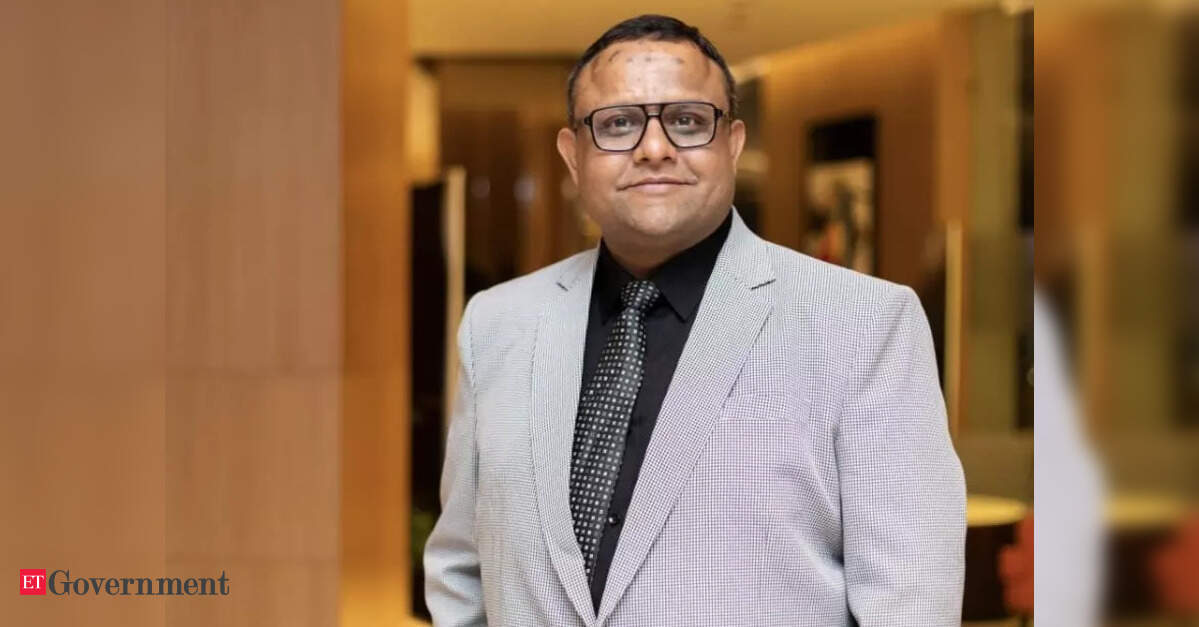
In this interview, Prof. Rahul Tiwari, transport planning expert and faculty at MANIT Bhopal, speaks to ET Government’s Sudhanshu Mishra about why buses—not metros—must remain the backbone of urban transport, why affordability should anchor mobility policy in Madhya Pradesh, and why institutional reform is as important as infrastructure creation. He explains how planning, governance and design must converge if Tier-2 cities are to deliver inclusive and sustainable mobility.
Edited Excerpts:
India has invested heavily in roads and metro rail over the past decade. How do you assess this transition, and where are cities still falling short?
Over the last ten years, India has made a conscious shift towards large-scale transport infrastructure. Road networks have expanded and metro systems have become the preferred symbol of modern urban mobility. Compared to two decades ago—when cities like Bhopal relied on unsafe and ageing vehicles—the overall quality of transport assets has undoubtedly improved.
The shortcoming, however, lies in what we have overlooked. Pedestrians, cyclists, rickshaws, buses and last-mile connectivity have not received proportionate attention. These modes serve the majority of daily trips, yet they remain underfunded and poorly planned. Infrastructure creation has outpaced inclusive mobility planning, and that imbalance is now visible on city streets.
Despite continuous road expansion, congestion and travel times continue to rise. Why is this approach proving counterproductive?
Expanding road capacity often produces the opposite outcome because it encourages outward urban growth. As cities spread into peripheral areas—frequently without enforceable master plans—travel distances increase and dependence on private vehicles intensifies.
Municipal institutions lack the regulatory strength to guide growth in a structured manner. The result is fragmented development, higher emissions and rising public expenditure on infrastructure that struggles to keep pace with demand. This pattern is no longer limited to megacities; it is clearly emerging in Madhya Pradesh’s urban centres as well.
What should be the guiding principle for transport and urban planning in cities like Bhopal and Indore?
Bhopal and Indore are at a formative stage of urban transformation. Unlike Delhi or Mumbai, where corrective measures are complex and costly, these cities can still be shaped deliberately.
The priority should be to create compact, walkable and transit-oriented urban forms. By limiting spatial expansion and strengthening public transport, cities can reduce travel time, household transport expenditure and environmental impact. Planning decisions taken today will directly influence quality of life over the next several decades.
With increasing emphasis on metro projects, where do buses fit into Madhya Pradesh’s mobility future?
Metro systems are not universally viable. Their construction and operation involve substantial financial commitments, and if ridership does not meet projections, the cost per passenger becomes unsustainable.
Buses offer a more adaptable alternative. They require lower investment, routes can be modified quickly, and fleets can be customised to suit local demand. Initiatives such as the PM e-Bus Sewa scheme are particularly encouraging because they shift maintenance responsibility to manufacturers, improving reliability. For cities like those in Madhya Pradesh, bus systems must remain the foundation of urban mobility.
How can cities enhance public transport performance without significant capital expenditure?
Strategic land-use planning can deliver immediate gains. Encouraging higher density development around major transit corridors increases ridership without adding new infrastructure.
Equally important is operational reliability. Intelligent Transport Systems—such as real-time vehicle tracking, fleet management and service monitoring—introduce transparency and predictability. Today’s commuters expect dependable services, and technology can help meet that expectation when applied thoughtfully.
Road safety and Smart City mobility initiatives have seen uneven outcomes. What needs to change?
Road safety must be treated as a specialised technical discipline. Scientific safety audits should be institutionalised and supported by academic institutions with domain expertise, including IITs and MANIT.
Smart City programmes, meanwhile, equated intelligence with hardware. Control centres and surveillance systems are useful only when data is actively analysed and applied. Technology should inform decisions, not merely exist as an expensive installation. Public spending must deliver tangible improvements, not symbolic upgrades.
What makes Madhya Pradesh’s mobility challenge distinct, and how does transport planning influence social equity?
Affordability defines Madhya Pradesh’s transport context. Fare structures that function in high-income metropolitan regions can exclude large segments of the population here.
Well-designed public transport has a direct impact on social inclusion. When Indore introduced its BRTS, a significant proportion of women reported travelling independently for the first time due to improved safety and comfort. Mobility systems shape access to education, employment and healthcare, making transport planning a powerful tool for economic participation.
What governance reforms are essential to improve urban mobility outcomes?
Fragmentation is a major obstacle. Road construction, bus operations, metro services and traffic enforcement are handled by separate agencies with limited coordination.
Madhya Pradesh would benefit from an integrated authority responsible for aligning transport and urban development. Additionally, a dedicated municipal cadre of trained urban and transport professionals is essential. Urban governance requires technical continuity, not frequent administrative rotation.
How can institutions like MANIT contribute more effectively to public policy?
Academic research offers an objective diagnosis. Without an accurate understanding of problems, policy responses remain superficial.
At MANIT, we are collaborating with Bhopal Municipal Corporation on a school-zone safety pilot covering multiple educational institutions. Such partnerships demonstrate how research institutions can support evidence-based decision-making and improve on-ground outcomes.